It happened the other day.
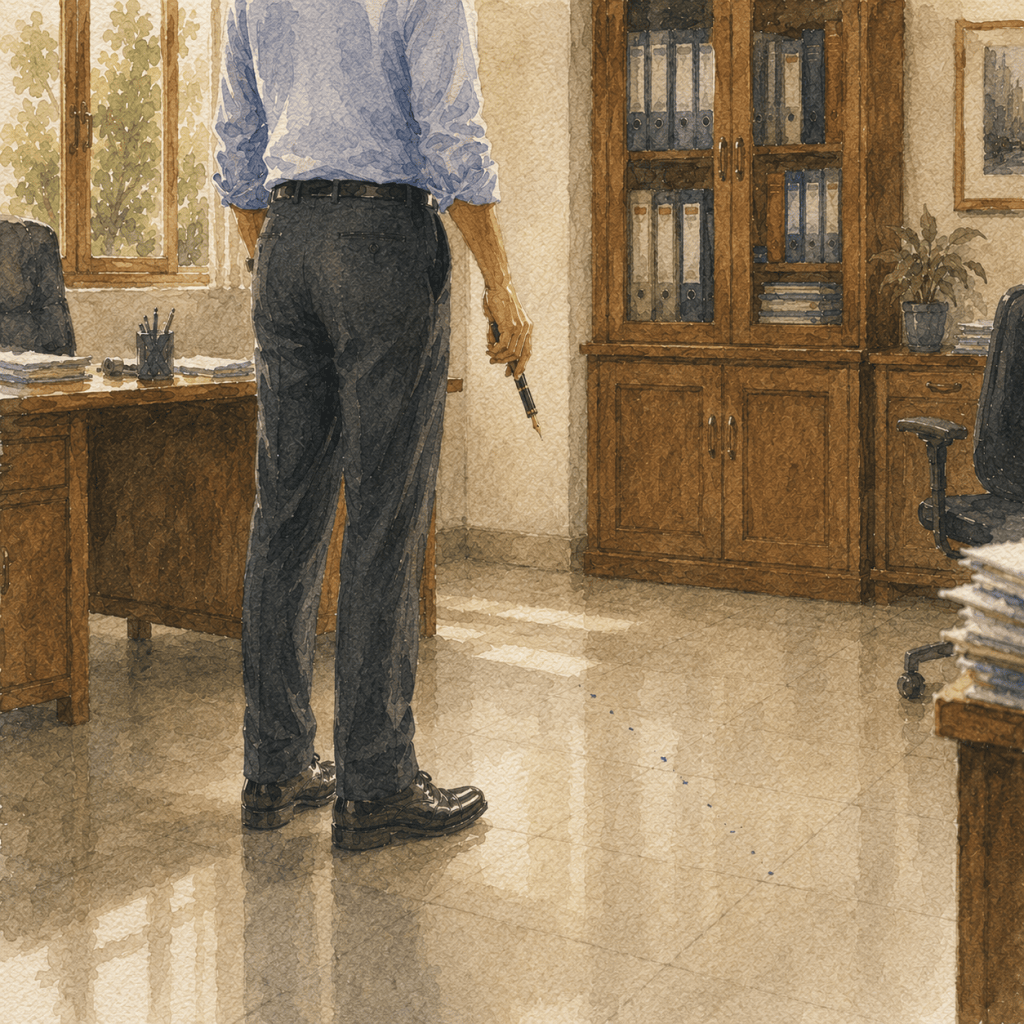
I was writing with an ink pen. The ink had apparently dried inside it. I shook it once. Nothing.
I shook it again.
Still nothing.
So I gave it a slightly harder flick of the wrist.
The pen suddenly came alive.
Not on the paper.
On the floor.
A fine spray of blue ink scattered across the tiles. One particularly enthusiastic drop landed
several feet away.
I stood there looking at the mess.
And strangely, my first thought was not about cleaning it.
It was about ink.
And almost immediately, I was back in the government primary school I had attended as a child.
I dreaded that school and I was there for about a couple of months. Yet, in those few months, I seem to have been initiated into a whole little world of learning – a world in which writing was not something you simply began.
You first had to prepare for it.
There was the takhti, a small, flat wooden writing board, locally called a phatti.
Even before it became a place for proper schoolwork, there was an earlier beginning – at home.
When we were first being taught the alphabet and numbers, our parents would use what we called a sikka – the slender graphite pencil carefully taken out of a discarded 1.5-volt battery.
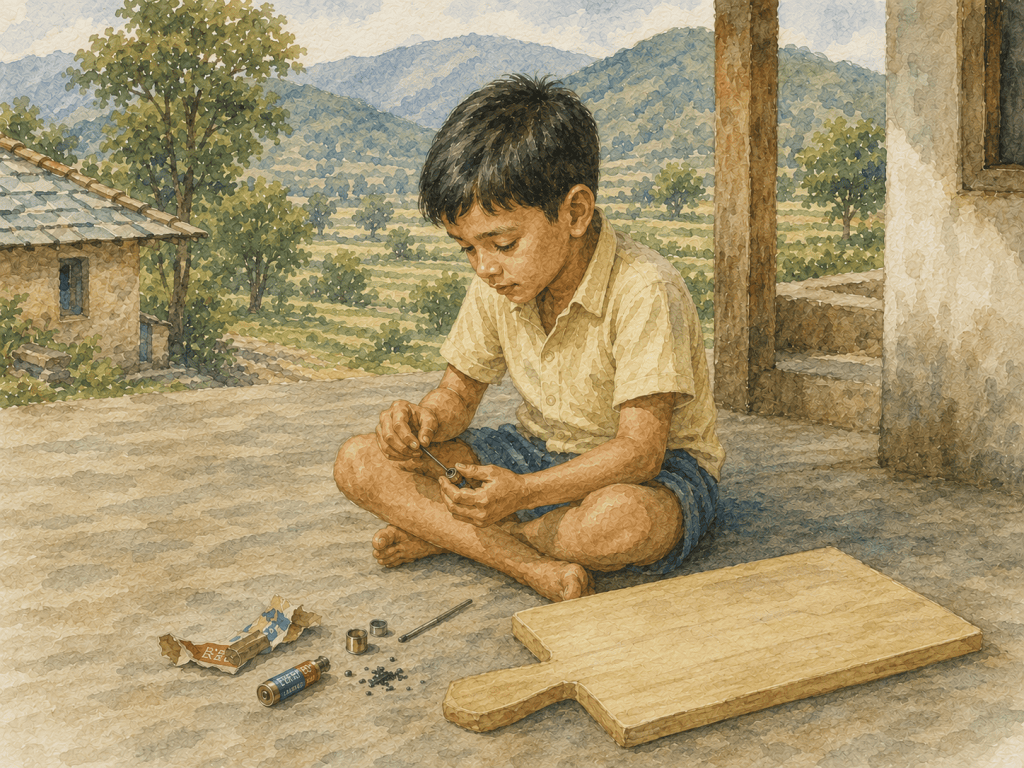
Getting the sikka out was a small adventure in itself. First, the cardboard label had to be peeled away. Beneath it was the hard metal casing, which had to be opened carefully. Inside was theblack carbon packed around the fragile graphite pencil running almost the entire length of the battery.
You loosened it slowly, almost coaxing it free, because one careless movement could snap it.
When the sikka finally emerged – long, black and delicate, with its little steel cap still intact – getting it out whole felt like a small victory.
Our parents would use the sikka to draw alphabets and numbers lightly on the takhti – rough, faint shapes showing us where a line began, where it turned and where it ended. We followed those outlines with the kalam, slowly teaching the hand to follow what the eye could see.
The sikka showed the way; the kalam, a simple reed pen cut and shaped to form a writing tip, slowly teaching the hand to follow what the eye could see.
At school, the takhti settled into a rhythm of its own.
Each morning we brought it back with our home assignment written on it. The teacher would check the work and only after it had been seen could yesterday’s writing disappear.
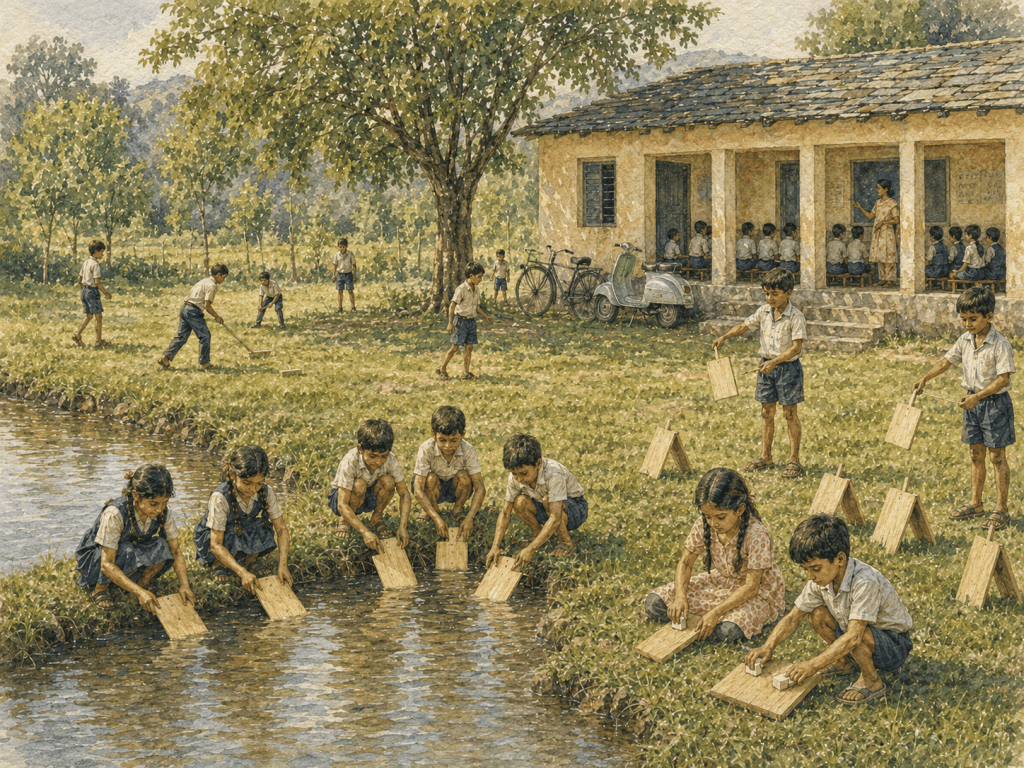
There was a pond near the school.The whole class would go there carrying our takhtis. We washed them together, rubbing away the writing until the wooden surfaces were clean once more. Letters and numbers that had taken such care to form the previous evening slowly vanished beneath the water and our hands.
Over the clean wood we spread gaachni – a soft, fine natural clay, somewhat like Multani mitti,
used to prepare the surface for writing again.
The board was wet now and had to dry.
We held it in our hands, turned it around, rotated it, rubbed it, kept it in the sun, moved it this way
and that – whatever seemed to work. There was no particular technique, no particular hurry. The whole class was doing the same thing.
Once the surface was ready, we returned to class and wrote the day’s work on it. That writing stayed exactly where it was. At the end of the school day, the takhti came home with us.
At home, we washed it once more. The classwork disappeared. Gaachni was applied again, the board dried again and only after the surface was ready did we begin the homework assigned for the next day.
That writing was different.
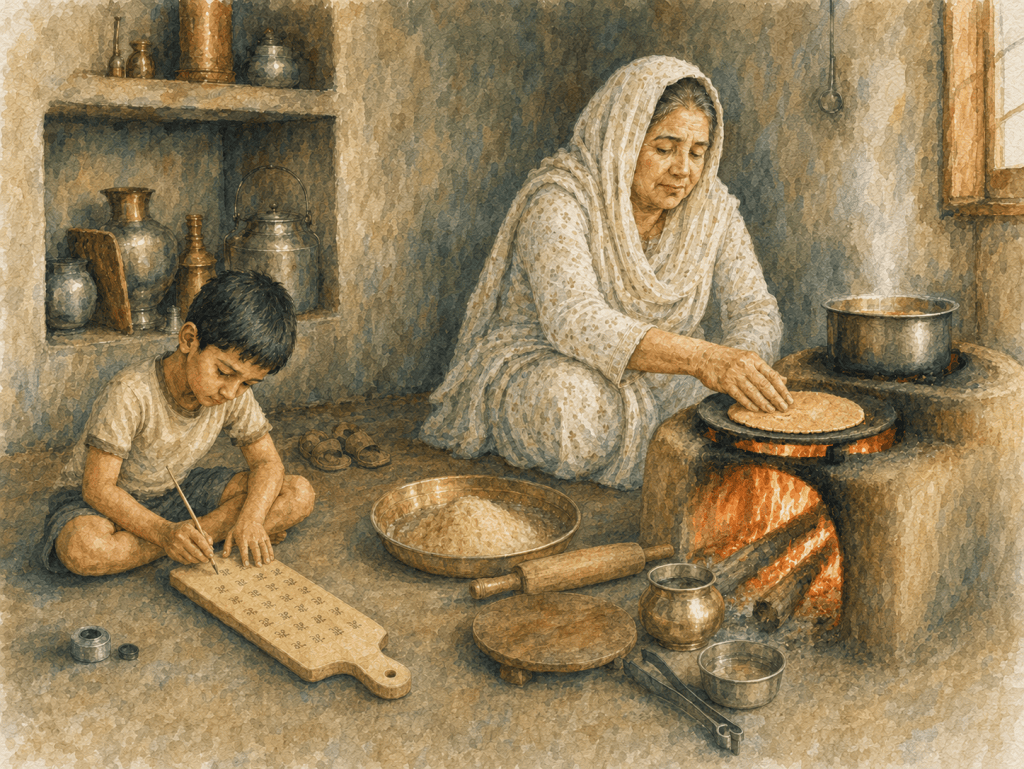
There was no bell about to ring. No teacher waiting for us to finish. No classroom moving on to the next lesson.
We could sit with a letter, take care over a curve, redo a stroke that did not look right and make the best of the ink.
Perhaps that is why the handwriting at home always seemed better. We wrote slowly and carefully, with the kind of time that a child never thinks of as a luxury.
The next morning, the takhti went back to school. The teacher checked the homework and the cycle began again.
We never called it a ritual. It was simply how writing happened. Yet there was a quiet discipline in it: prepare the surface, do the work, let it be seen, wash it away and begin afresh.
The kalam demanded its own kind of attention. The pressure mattered, as did the angle at which it met the surface and the amount of ink it carried. There was also the dakkha, into which different nibs could be fitted.
Those nibs fascinated me.
Change the nib and the line changed with it – a broader stroke, a finer one, a different movement of the hand. Somewhere in that little collection of nibs, writing became more than simply putting down the right answer.
I began noticing how a letter looked.
A letter could be correct.
Or it could be beautiful.
Perhaps that was where my liking for calligraphy began.
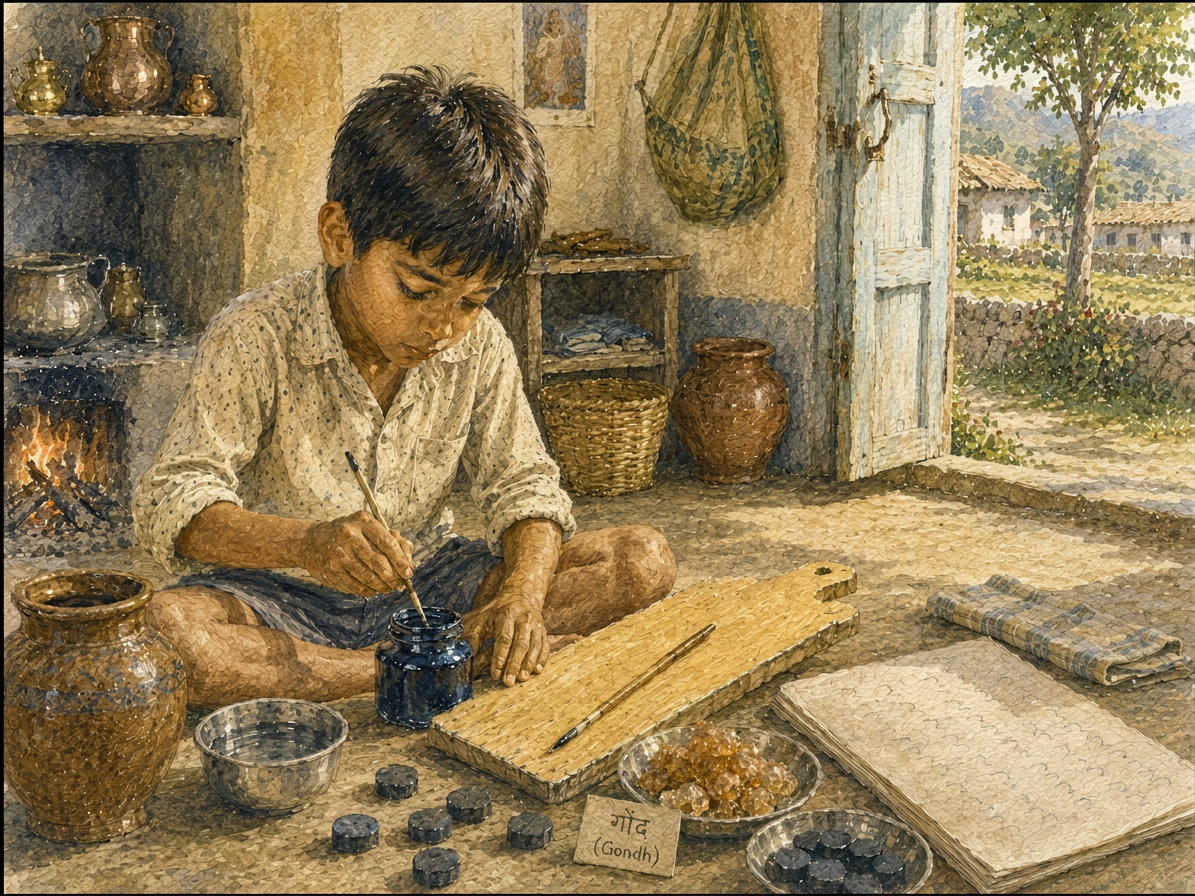
Ink had its own fascination.
We made it from little ink tablets dissolved in water. Getting the colour right, however, was another matter. Quite often it came out disappointingly pale.There were little tricks for that too. A little more tablet. A little less water. And, as I remember, sometimes a little gond – the natural gum collected from trees – would be dissolved and added to give the ink more body.
It was almost a small science of our own.
Stir it.
Dip the kalam.
Try a line.
Look at it.
Still too pale.
Adjust it again.
And when a deep, clean line finally appeared, there was a satisfaction entirely out of proportion to the little pot of ink in front of us.
By then I had begun to understand that ink had a character of its own. It could be pale or rich, flow beautifully or make a blot. That small fascination would stay with me.
After those few months, I left that school and moved to a public school.
Almost overnight, that world was left behind.
There was no takhti to prepare, no gaachni, no ink tablet to dissolve, no class walking down to the pond for the daily ritual of washing off the home work.
There were ballpoint pens instead – bright, flashy, modern – looking things that seemed wonderfully exciting then.
You picked one up and wrote.
That was all.
For some time, I continued using the kalam, particularly for Hindi and English. I cannot remember exactly when I stopped. Somewhere along the way, it simply slipped out of everyday use.
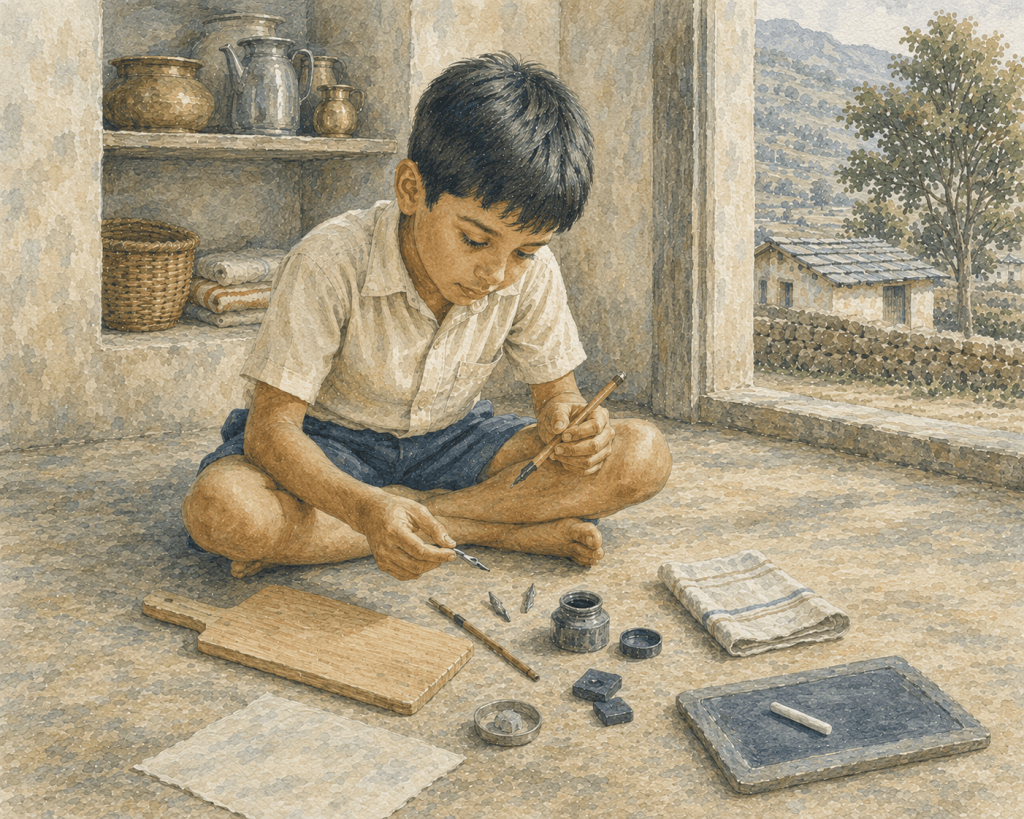
The liking for ink, however, had already settled in.
I started using inexpensive fountain pens. And somewhere above those ordinary pens, in the imagination of a boy of that time, was one particular pen I wanted – the black Chinese fountain pen with the golden cap.
Hero.
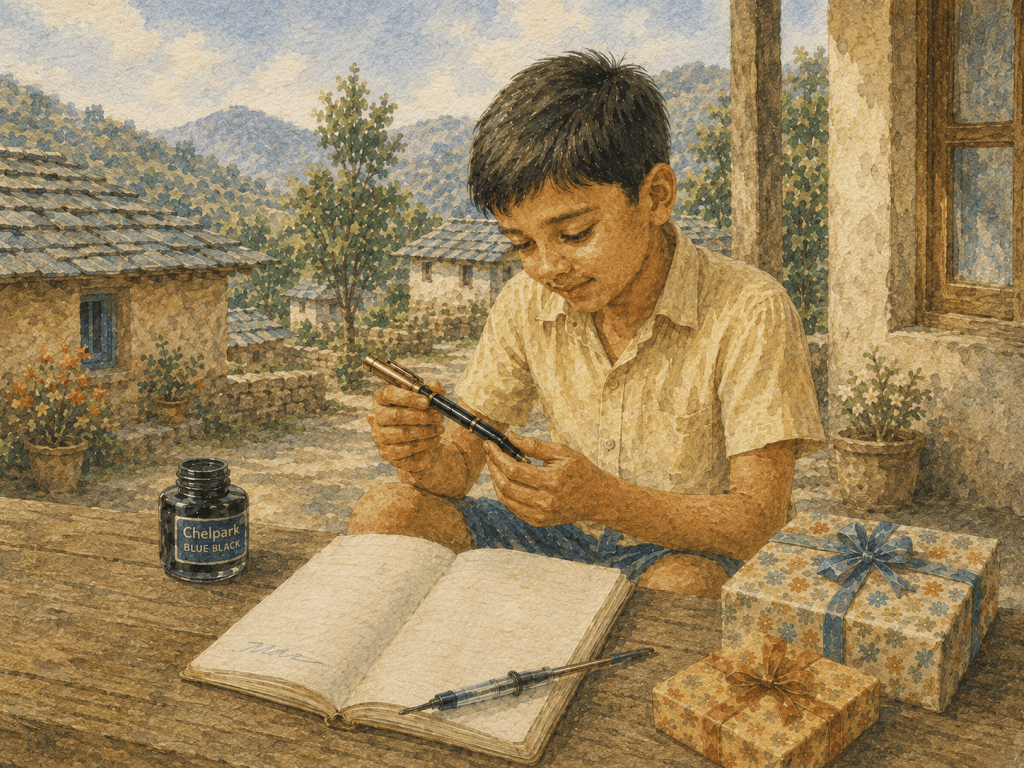
I think I received one on my tenth birthday.
I don’t remember all the presents I got that day.
I remember the pen.
By then, ink no longer came from tablets. There was a bottle of Chelpark and filling a fountain pen had become its own familiar little act.
The materials had changed, but something connected them. The child who had once fussed over whether his homemade ink was dark enough had become the boy who liked filling a fountain pen, watching the nib touch paper and seeing the ink follow.
The habit stayed.Which is perhaps why that sudden spray of blue ink on the floor the other day did something more than make a mess. For a few seconds, it opened a door to a world in which writing had once taken time before it began.
We found easier ways to write.
Faster ones.
Cleaner ones.
Pens no longer needed preparation. Surfaces no longer had to be washed and made ready. Ink no longer had to be mixed until its colour looked right.
Perhaps that is simply how things move on.
But somewhere in making writing easier, we also left behind the little pauses that once surrounded it – the preparation, the waiting, the care over a line, the quiet pleasure when it finally looked just right.
None of it seemed precious then.
It was just school.
Just homework.
Just the way we wrote.
The takhti, the gaachni, the sikka, the ink tablets and, eventually, the kalam slowly vanished from schoolbags, classrooms and homes. Even some of the words began to fade from everyday speech.
Nobody announced their going.
There was no last day for the takhti. No farewell to the gaachni. No one knew that a particular ink tablet might be the last one a child would dissolve in water – or that somewhere, a class might be washing its wooden boards for the final time.
Perhaps that is how ordinary things disappear.
One day they are simply part of life.
And then, without anyone noticing, they are not.
I still write with an ink pen.
Maybe some things do not survive as objects. Maybe they survive as habits.
And sometimes I wonder whether, somewhere in all those years that have passed, there was one last child standing beside a pond, turning a freshly coated takhti in his hands and waiting for it to dry.
He would not have known that anything was ending.
Neither did we.
We thought we were simply getting ready to write.
And perhaps that is why a little spilled ink can still bring it all back – a world that disappeared so quietly.
We never imagined how deeply we would one day miss it.

