काश्यां मरणान्मुक्तिः (यहाँ मृत्यु भय नहीं, विमोचन है)
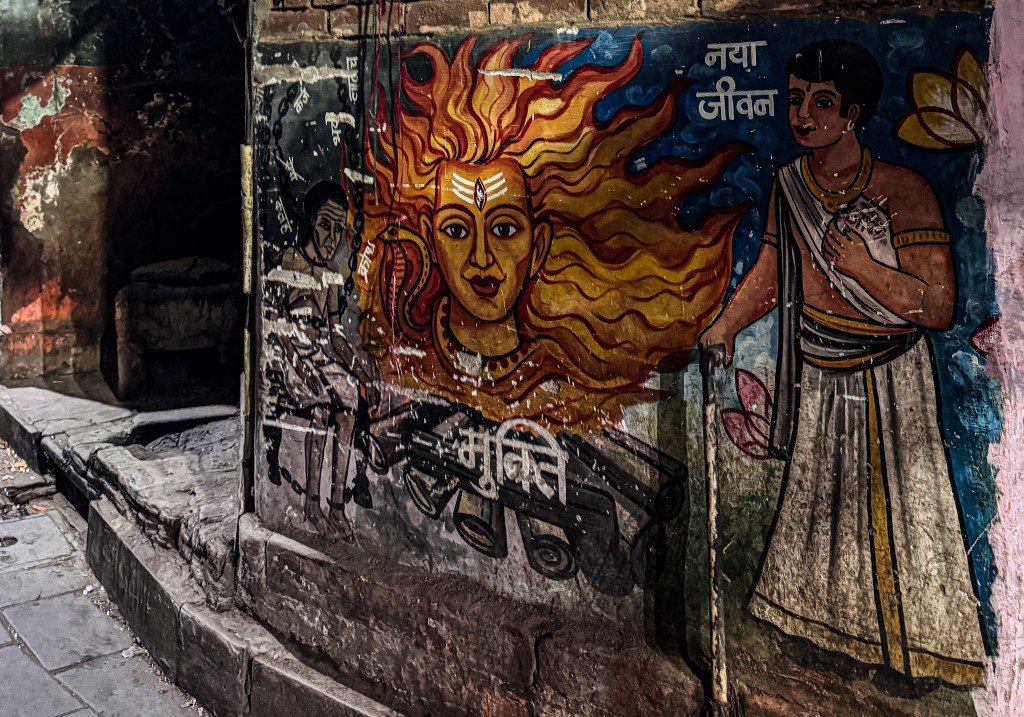
Manikarnika Ghat burns quietly, without urgency. The fire here does not rush; it continues. Bodies arrive, pyres are lit, ash is gathered and the cycle moves on, steady and unbroken. It is believed that death at this ghat brings mukti – a final freedom from return.
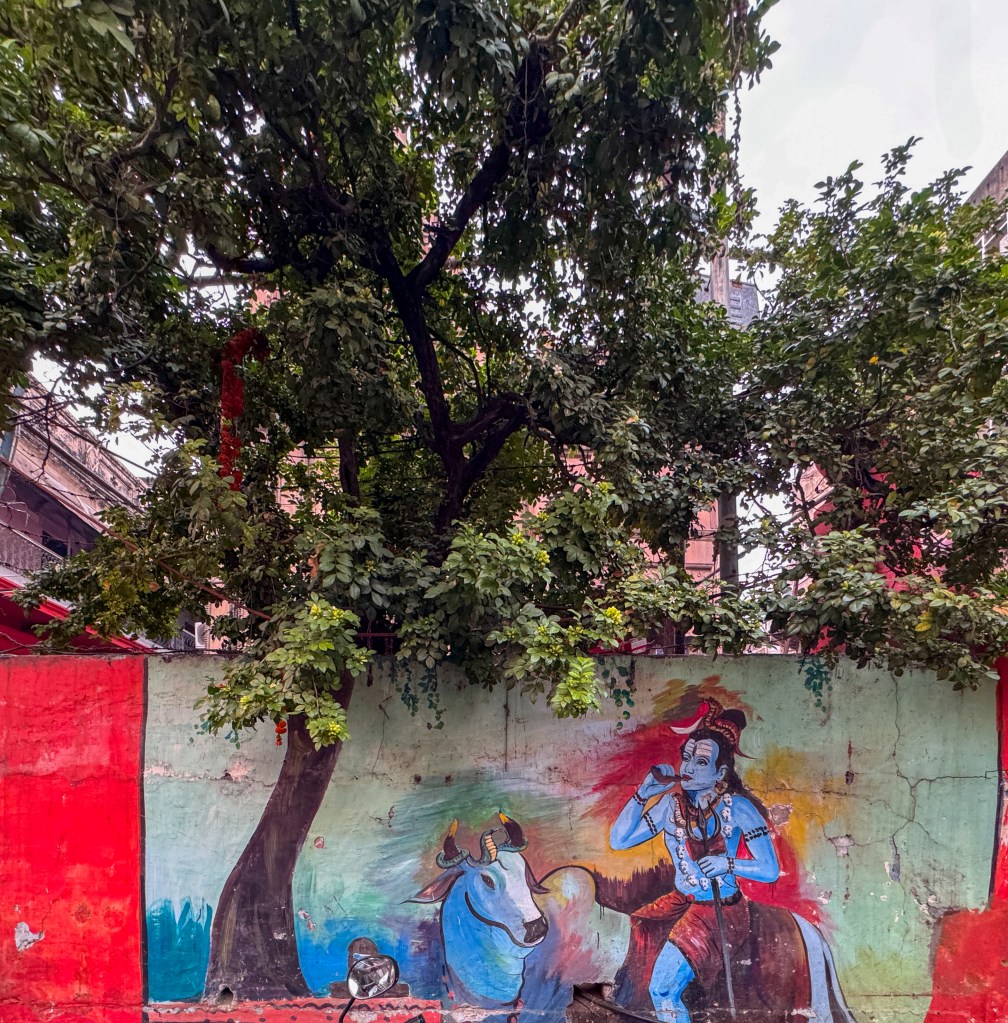
Manikarnika stands in Banaras, one of the world’s oldest continuously inhabited cities, revered as the city of Shiva. In Kashi, faith is not contained within temples alone; it drifts through streets and walls, carried by smoke, bells and routine.
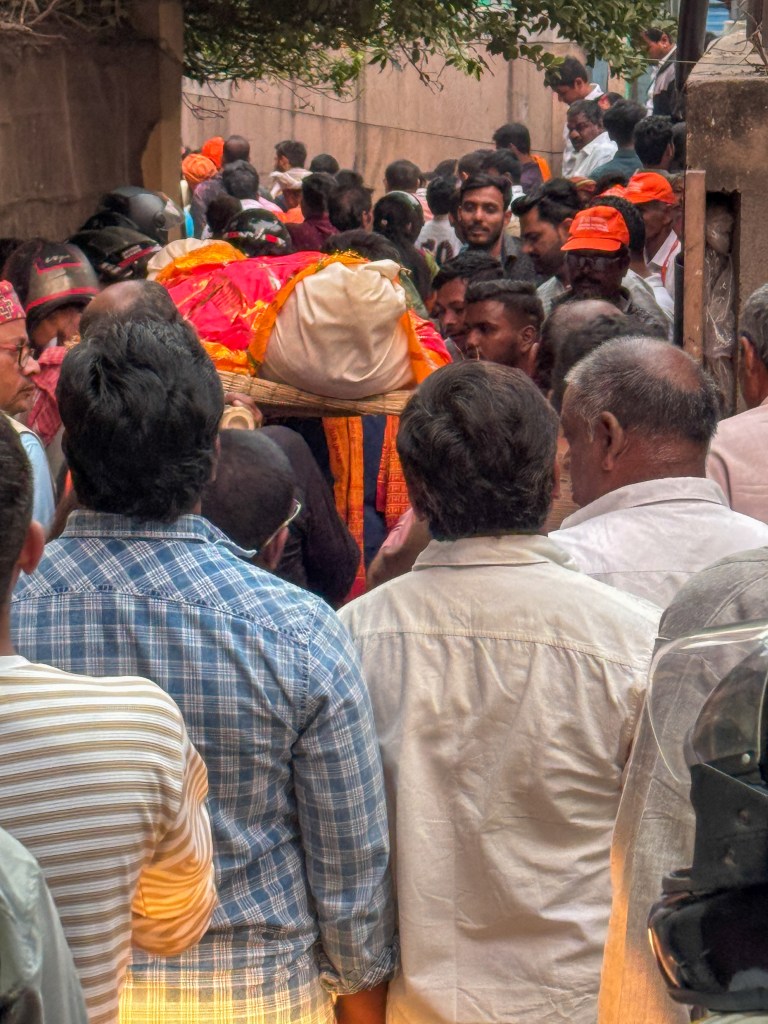
The path to the ghat winds through narrow lanes that draw you inward. In these passages, the living move aside gently as the dead pass through, borne on quiet shoulders. There is no haste, no disturbance—only an unspoken understanding.
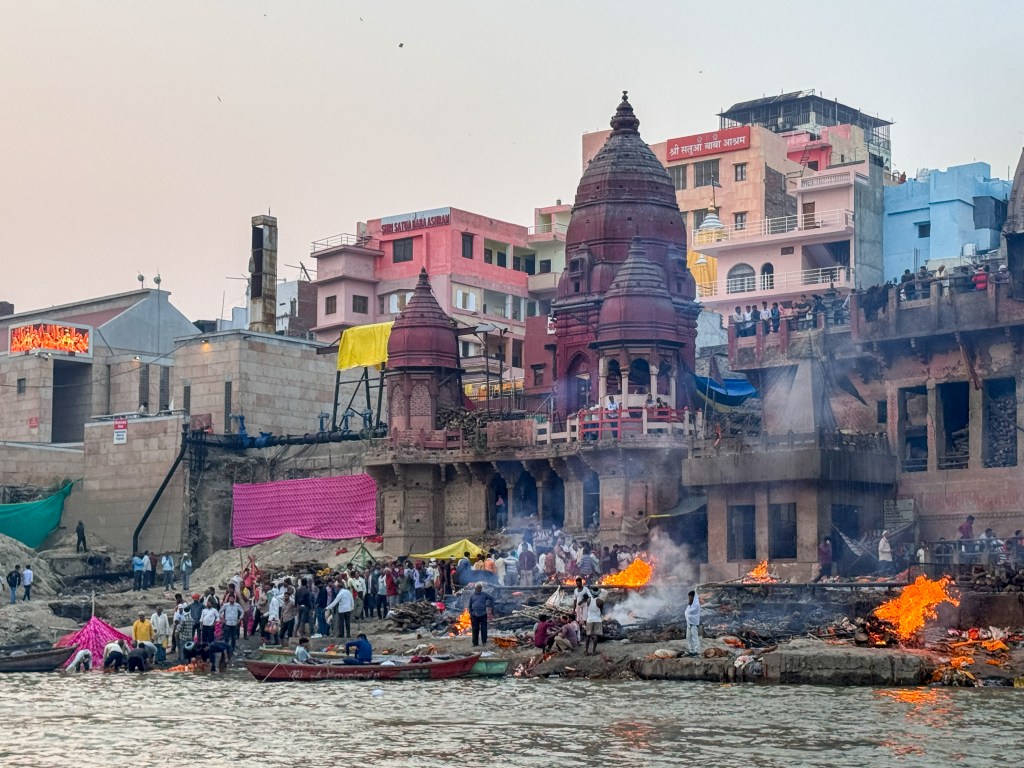
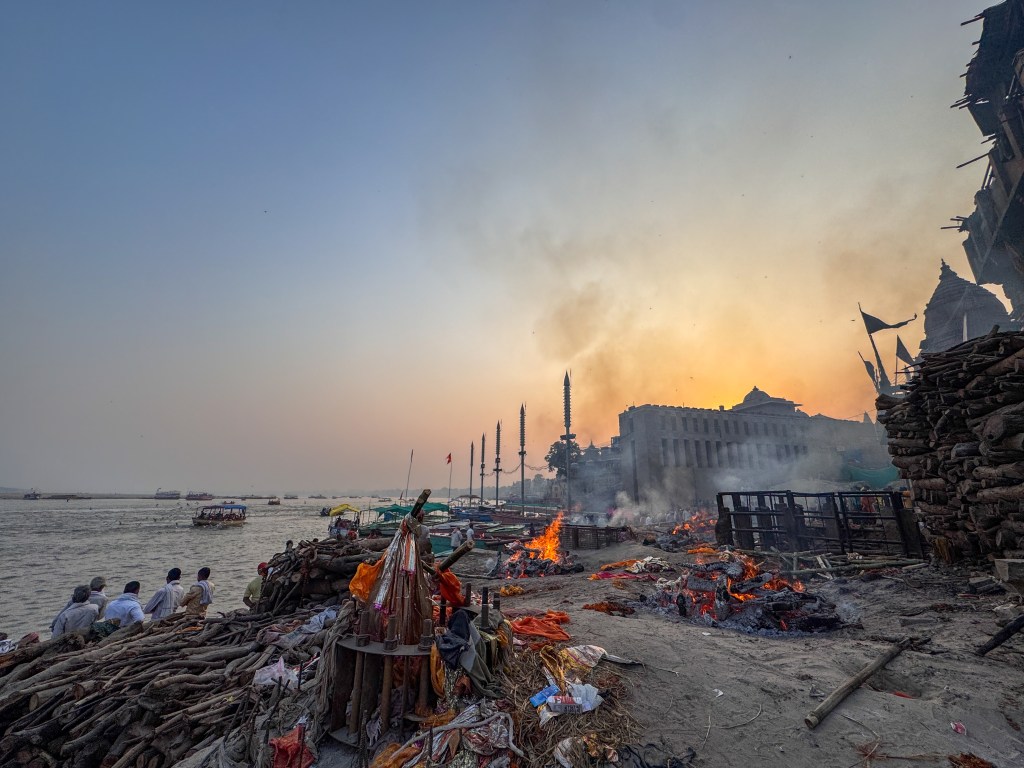
Then the lanes open and the Ganga comes into view. Fire meets water. Smoke lifts into the sky.
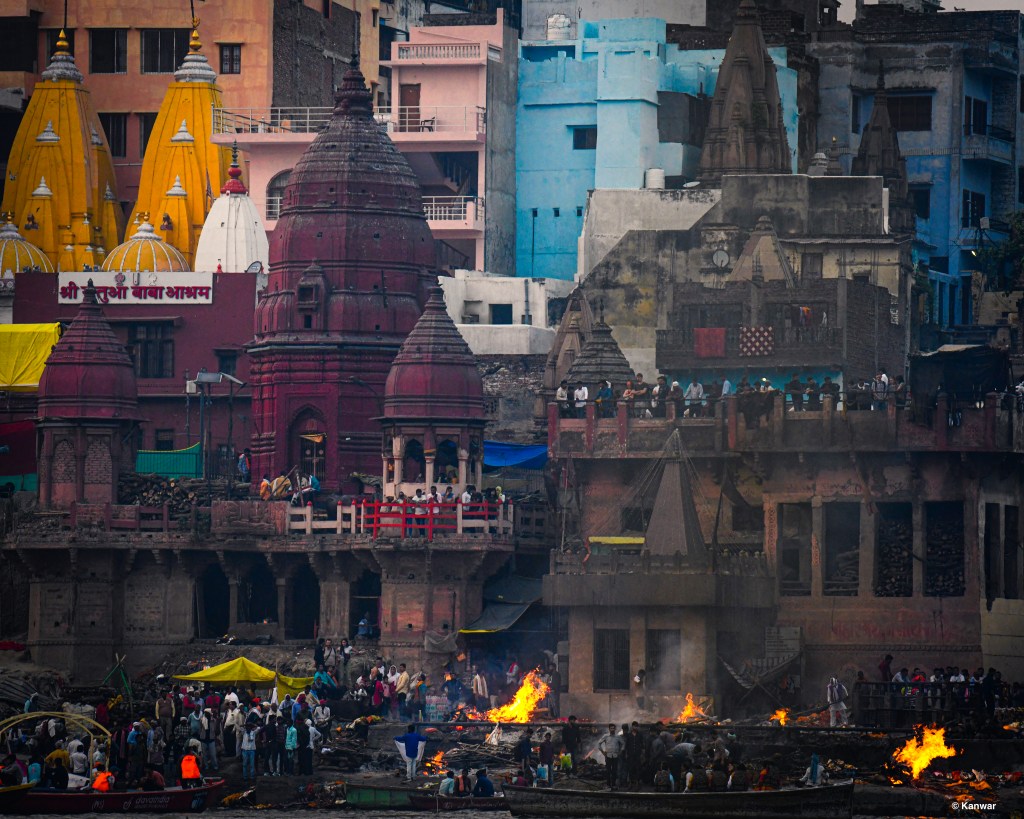
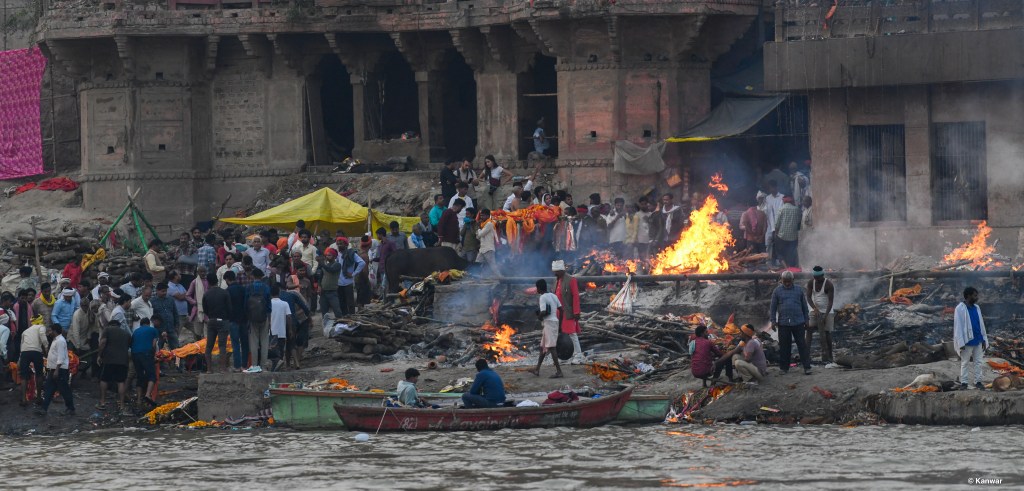
Boats drift past the pyres. Wood is stacked. Prayers murmur. At Manikarnika, death is neither hidden nor feared. It is accepted, settled and calm. The fire does not consume—it releases.

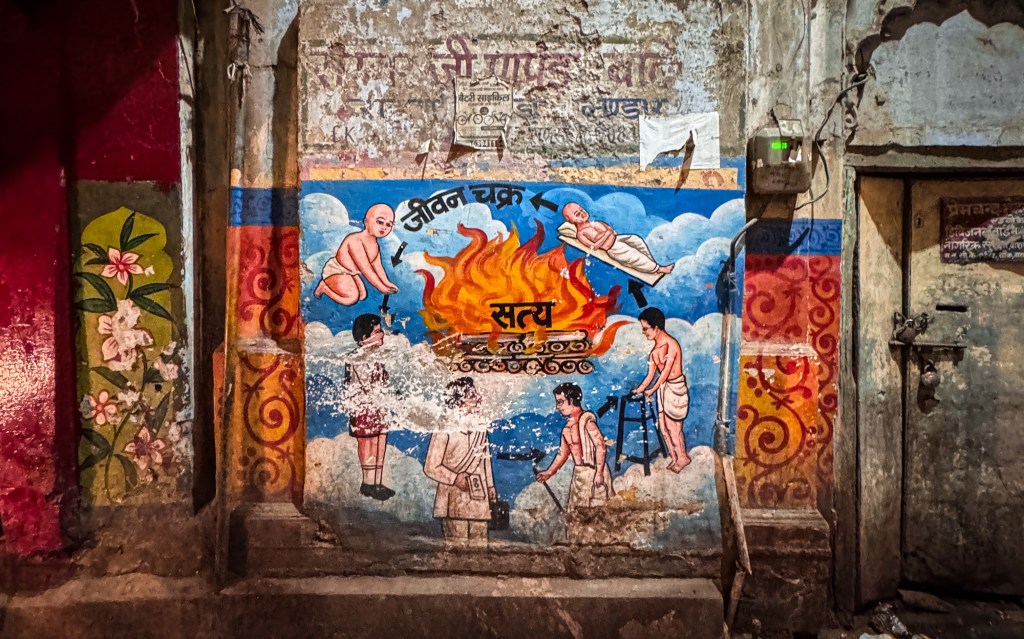
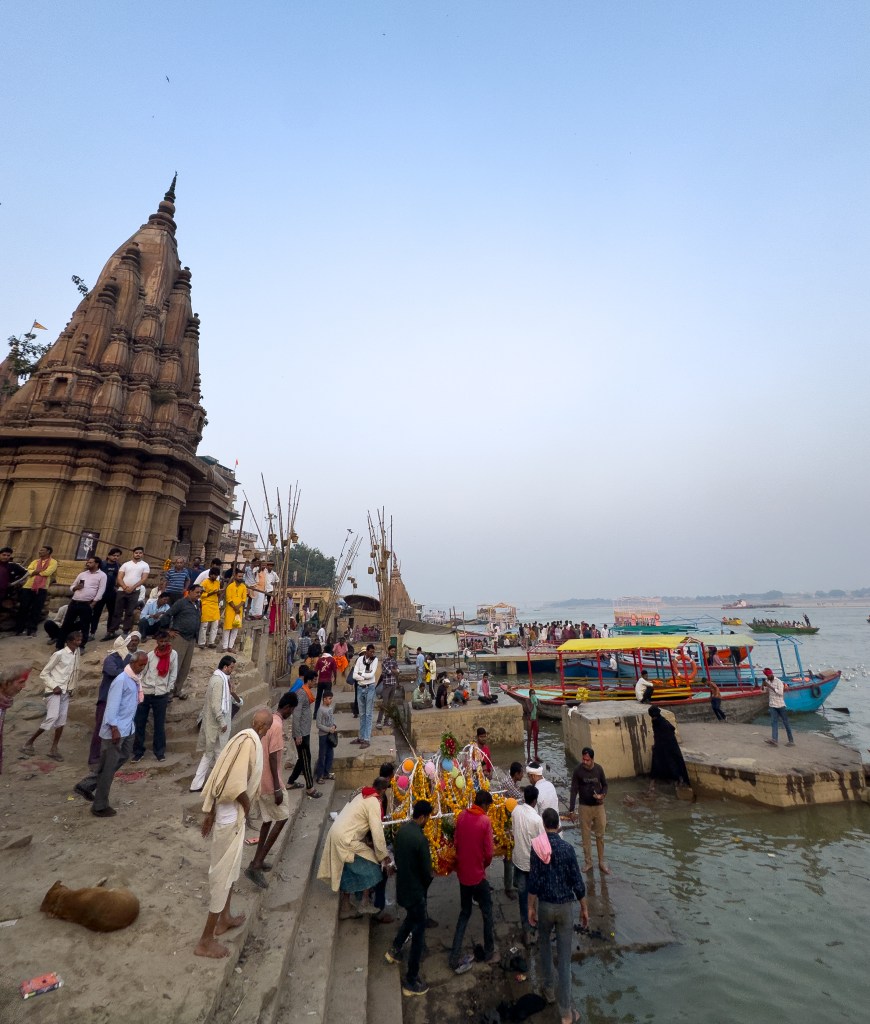
“डोम राजा, मसान का।” – folk saying of Kashi
The fires of Manikarnika are tended largely by the Dom community, families who have worked at this ghat for generations. They carry wood, tend embers, prepare pyres and keep the flames alive with quiet precision. Their movements are unhurried, shaped by familiarity rather than force. Fire, ash and smoke are not symbols to them, but daily companions. There is no display of grief or detachment – only routine. Through their steady presence, the ghat continues without interruption. At Manikarnika, it is their silent labour that allows death to pass calmly and the ritual of release to remain unbroken.
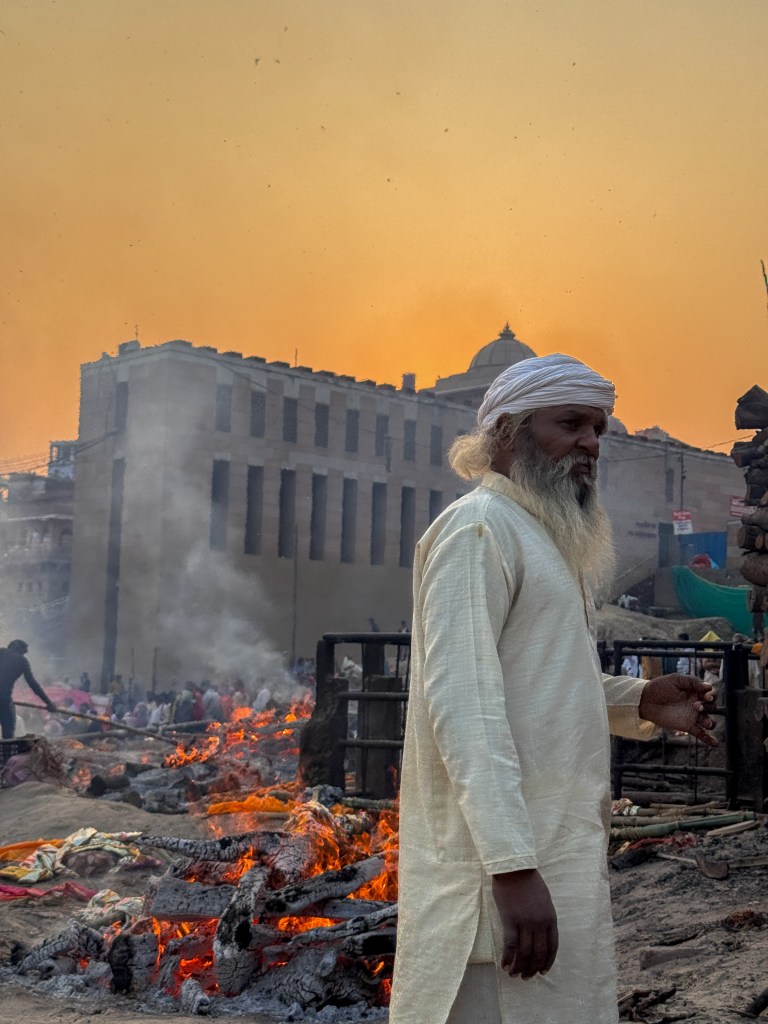
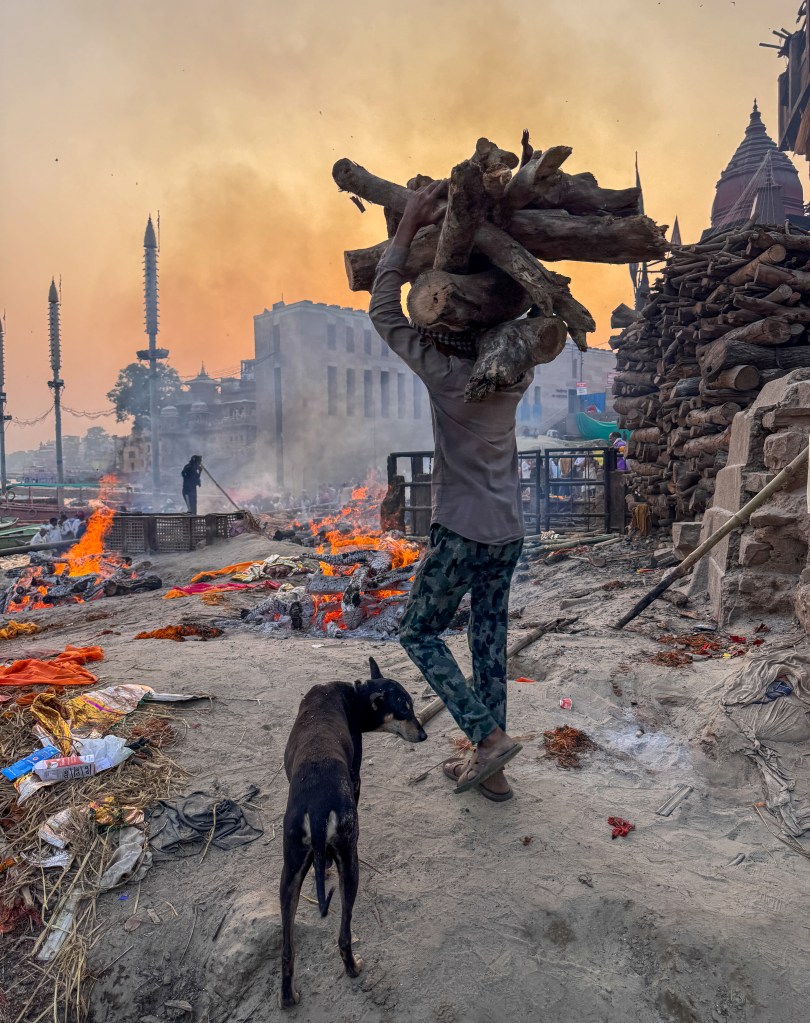
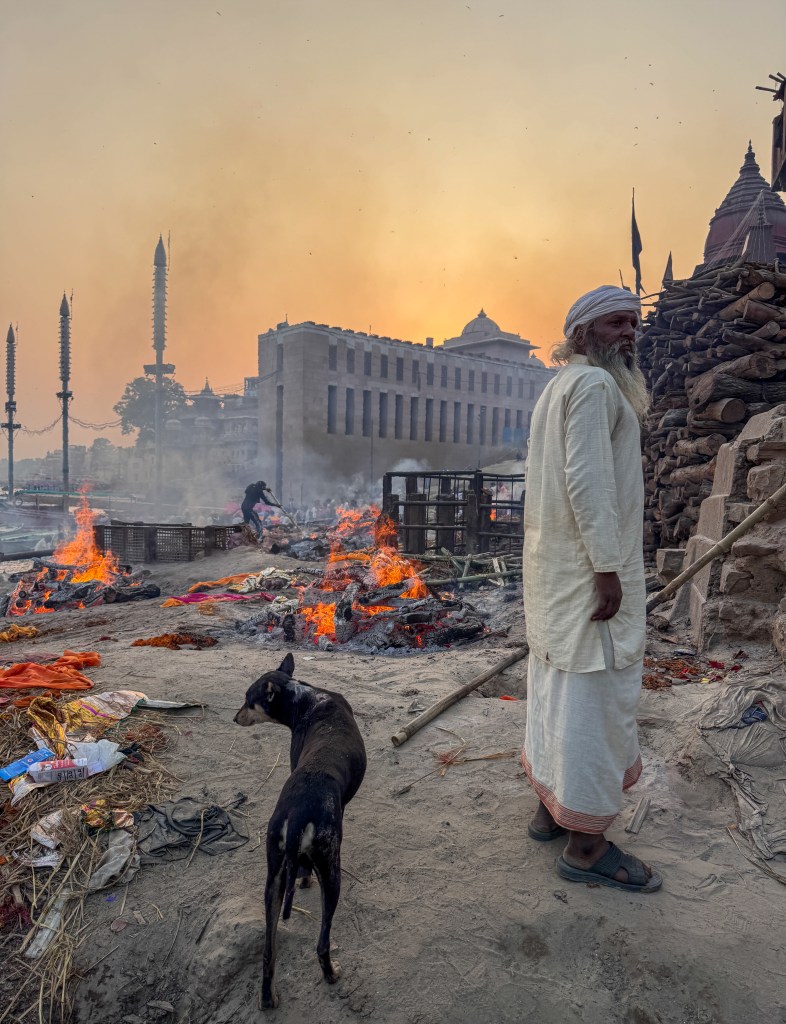
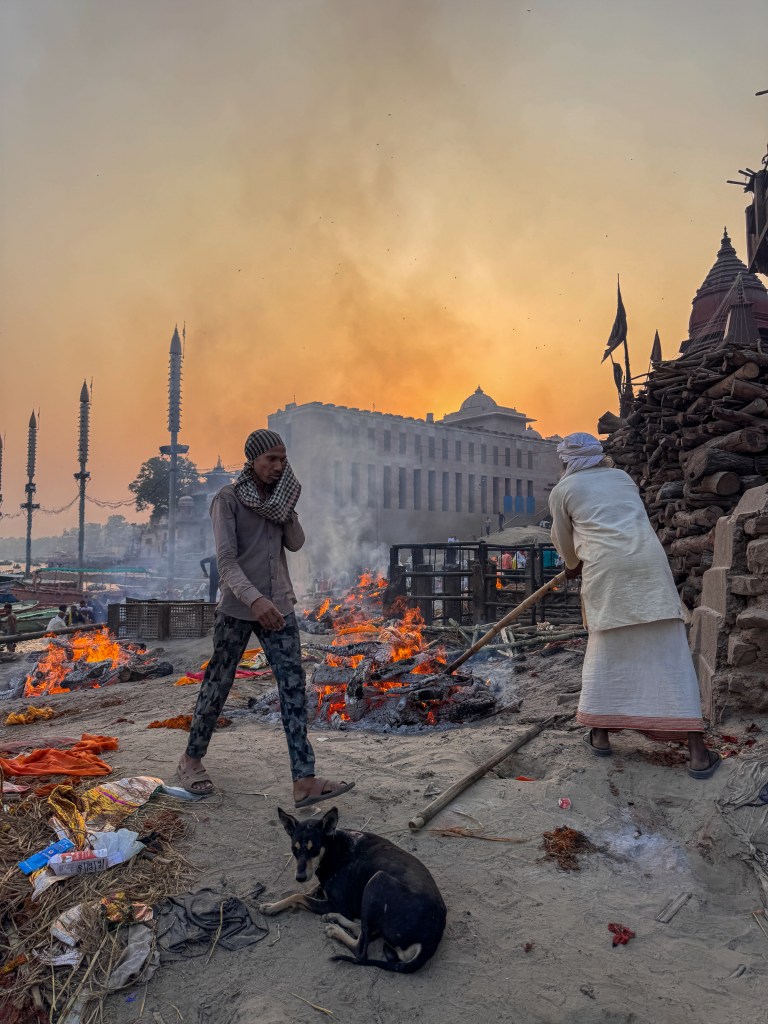
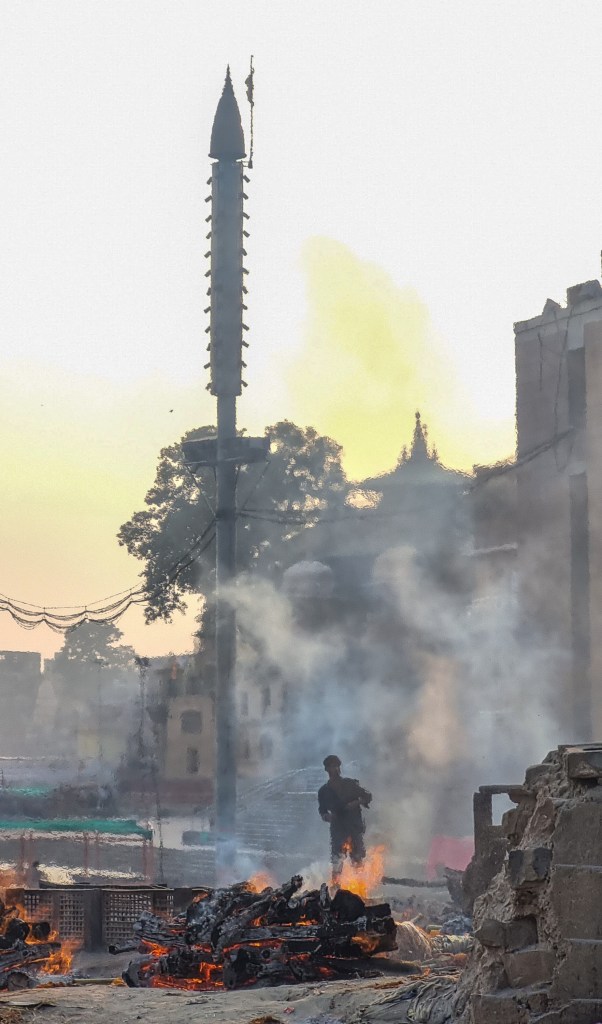
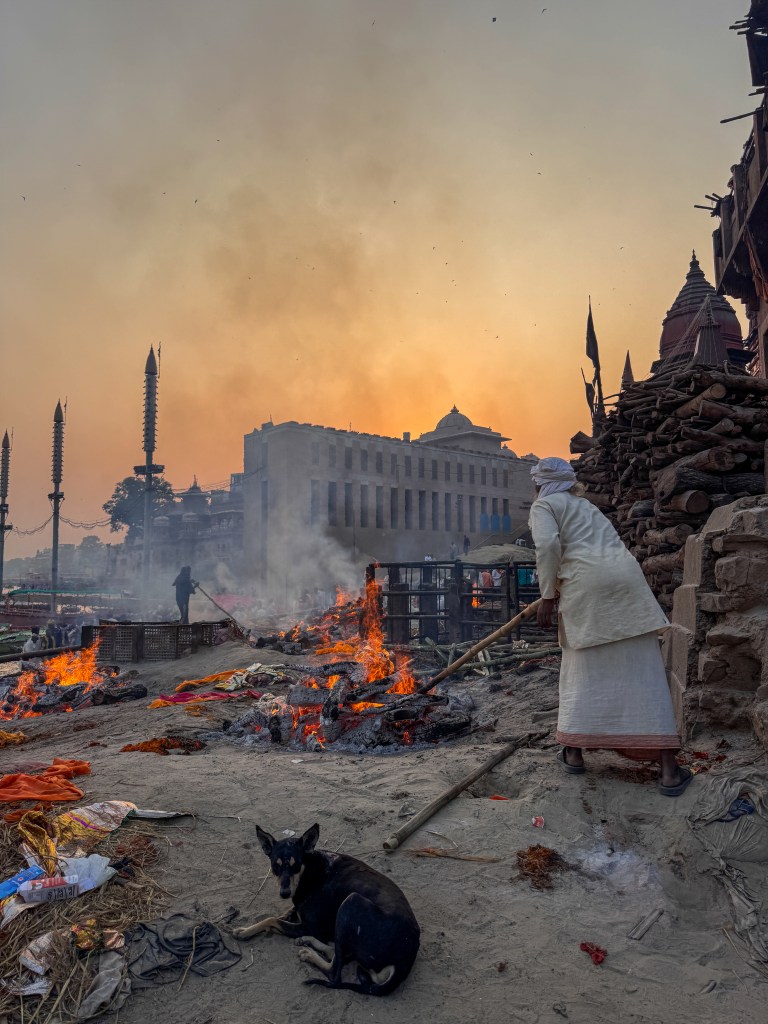
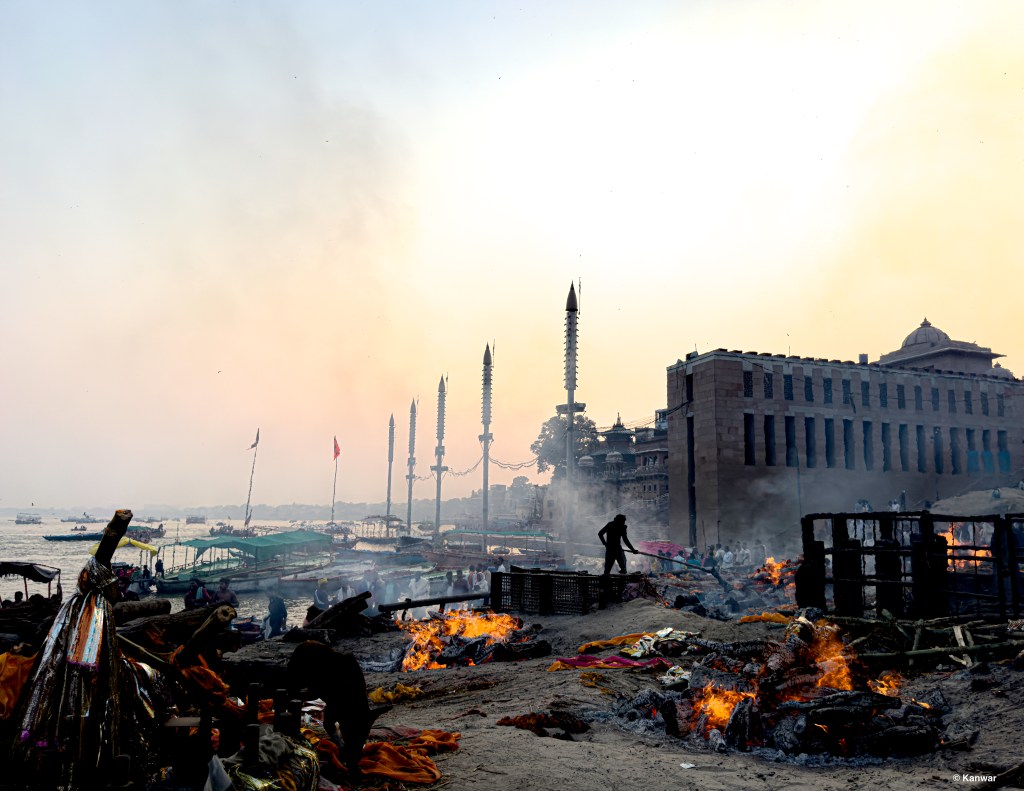
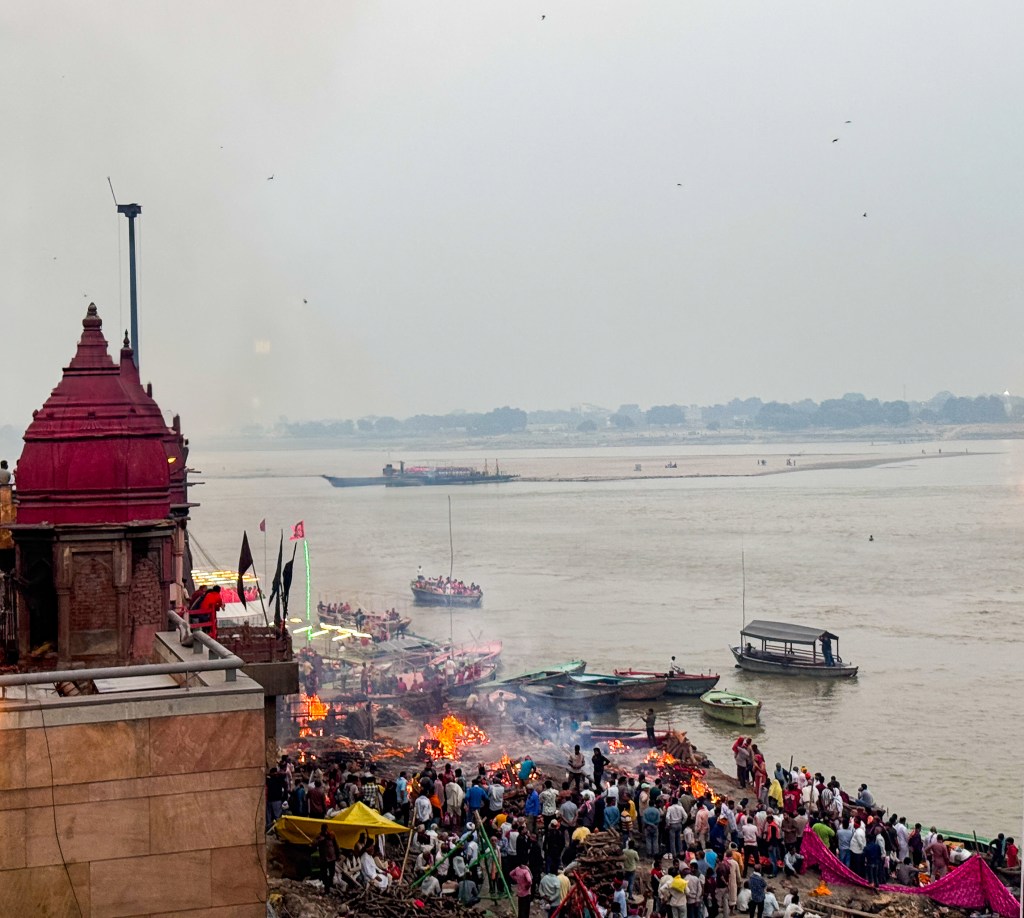
From a distance, Manikarnika changes its nature. The flames soften into points of light, the smoke thins into a veil and the ghat reveals itself as part of a larger stillness. Fire lines the riverbank like an ancient prayer, uninterrupted, continuous. Boats drift past slowly, as if aware of the moment. The Ganga flows on, carrying neither grief nor memory, only reflection.
This is Shiva’s city, where destruction is never separate from creation. As Mahadev, he is the lord of endings and beginnings alike—the one who dances at the edge of dissolution. The pyres below mirror that truth. Nothing here feels violent; everything feels ordained.
From above, Manikarnika is no longer a place of death. It becomes a passage—where flame, river and sky meet—and where the soul, it is believed, is finally unburdened.
“न कालो न देशो न देशः शिवस्य।”
(For Shiva, there is neither time nor place.)
 Musings of a Wanderer