“Though nothing can bring back the hour
Of splendour in the grass, of glory in the flower;
We will grieve not, rather find
Strength in what remains behind.”
— William Wordsworth, from Ode: Intimations of Immortality
I wasn’t prepared for it.
Just a quiet walk during my leave—nothing planned, nothing special. Until I turned a corner and there it stood—the place that once echoed with voices, laughter and the rhythm of everyday life.
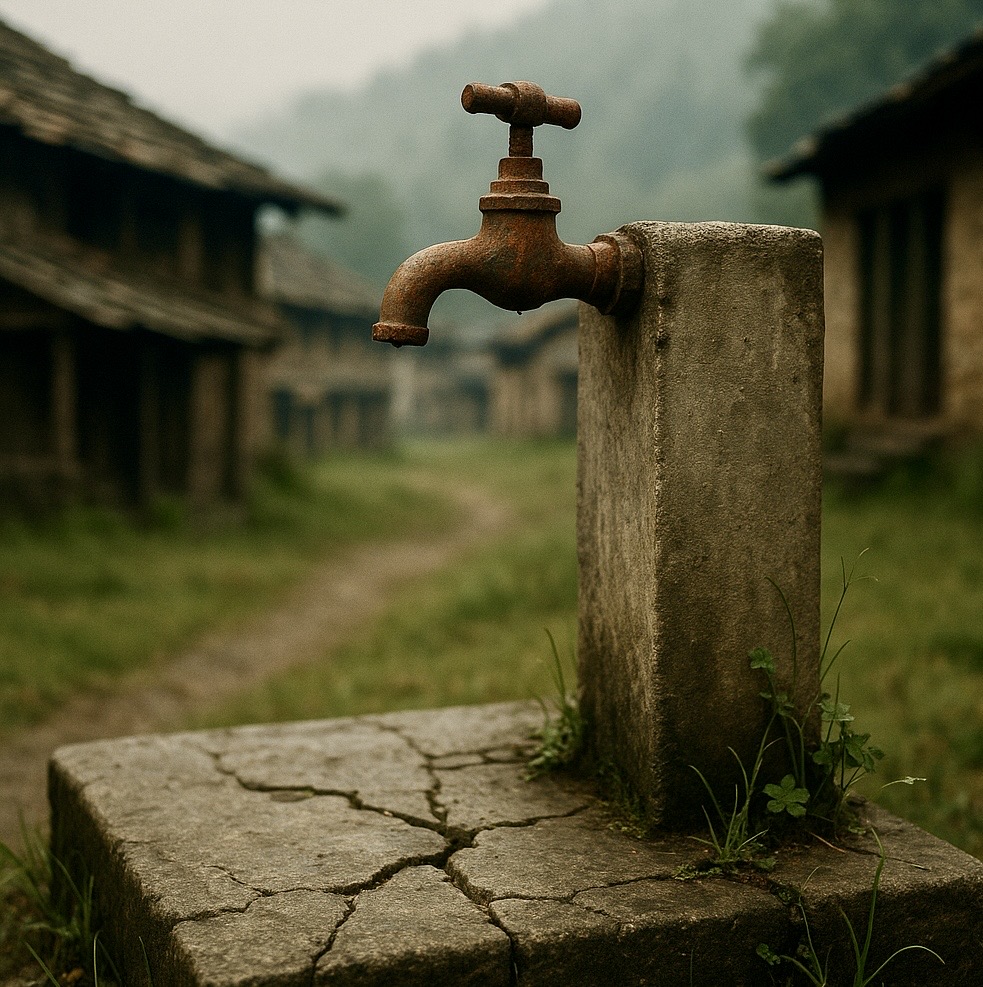
The old brass water tap.
Still there, somehow. But rusted. Bent. Dry. Lifeless. The cement slab below cracked, weeds curling along the edges. No children. No chatter. Just a dead silence where life once bustled.
But in my head, it was all still there.
This tap, once so ordinary, was the heart of our neighbourhood. Water wasn’t available all day back then. It came at fixed times—once early morning and again in the evening. And when it came, it brought all the familiar faces along with it.
Children were the first to arrive. Barefoot, clutching small brass lotas, they’d race to the tap with shouts and laughter. Some helped, most didn’t. They splashed water, played stapu or marbles and made paper boats float in the small stream running away from the tap. Their joy was pure, their world simple.
Teenagers arrived next. Groggy-eyed, half-unwilling. But soon drawn into whispered gossip, side glances, teasing smiles. That short wait around the tap sometimes held more excitement than an entire school day.
Then came the women. Confident, graceful, moving in rhythm. Balancing brass or earthen pitchers on their heads, one hand steadying the pot, the other brushing hair aside or gesturing mid-conversation. The talk flowed faster than the water—weddings, complaints, recipes, scoldings, dreams. A thousand little windows into their lives, all opening at the same time.
The men came too. Some early, others once the queue thinned. With metal containers carried over their shoulders, they discussed politics, crops, news from far-off relatives. There were arguments, opinions, advice—usually loud, sometimes wise, always lively.
Even people who hadn’t spoken in years due to old grudges stood side by side, waiting. No choice. The tap didn’t care who liked whom. You waited and while you waited, you softened.
And the sound…
Water striking the bottom of a pitcher—a hollow, echoing dhub-dhub. As the level rose, the sound shifted—fuller, deeper. When it neared the top, it turned into a rich gloog-gloog, the kind of sound you can feel in your chest. No one looked inside to check. You knew, just by sound, when to stop.
Now?
The tap stands alone. The water comes from inside our homes now—neatly piped, filtered and pressurised. The queues are gone. So is the laughter. So is that tiny wait that connected us.
We talk now through video calls, but it’s not the same. We text, but emotions don’t travel well through screens. We’ve gained convenience. But lost community.
And yet, there’s something comforting in the memory itself.
To have grown up in that world. To have waited in that line. To have heard that sound. To have seen the small, honest joy of people gathering for something as basic—and as bonding—as water.
And I believe… somewhere in this fast, filtered world, we’ll find our way back to such moments. Different form, same feeling. Because human warmth, like water, always finds a way to flow.
Just like it once did—around a humble brass tap.
“इस पार, प्रिये मधु है, तुम हो, उस पार न जाने क्या होगा,
इस पार शरद की चाँदनी में हँसने, गाने का मन है,
उस पार न जाने क्या होगा…”
— Harivansh Rai Bachchan, from “इस पार, उस पार“
 Musings of a Wanderer