
In the heart of a cacophonous railway station, where the symphony of life plays its transient chords, I sit as a detached observer awaiting the train that will sweep me away from this orchestrated chaos. The platform unfolds like a vast stage, each character playing a role in the drama of existence, but as I immerse myself in this spectacle, melancholy descends upon my perception.
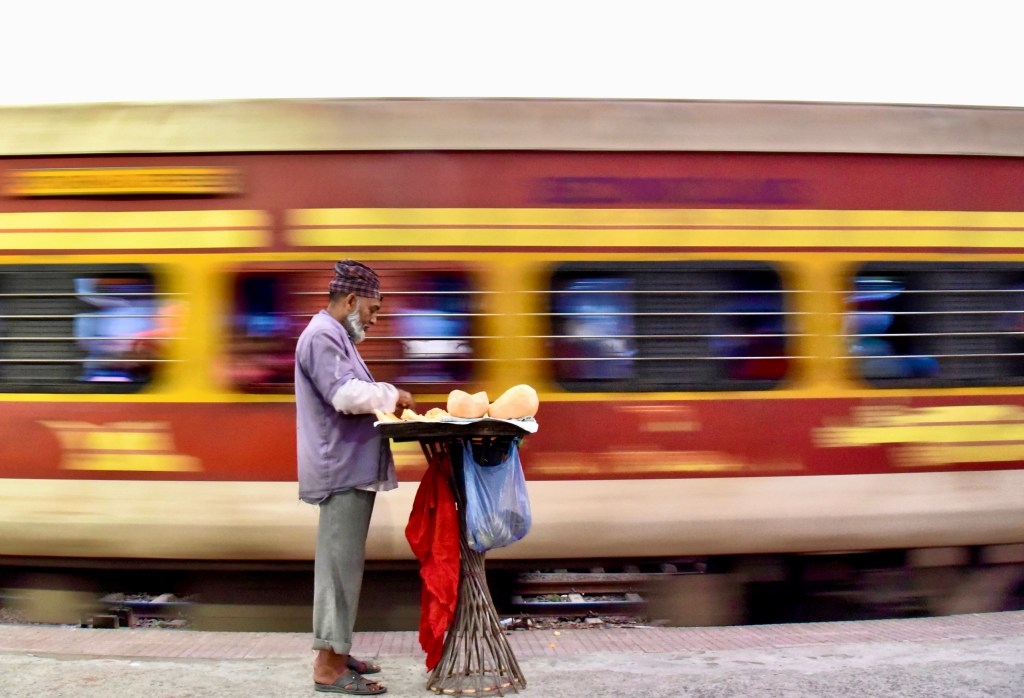
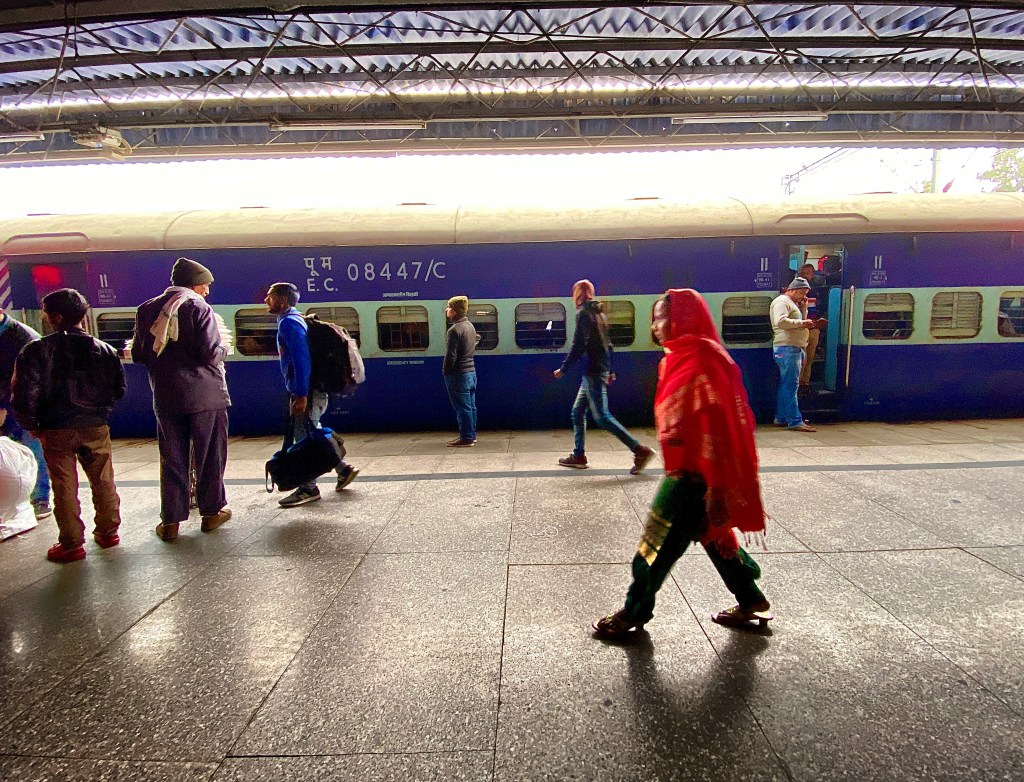
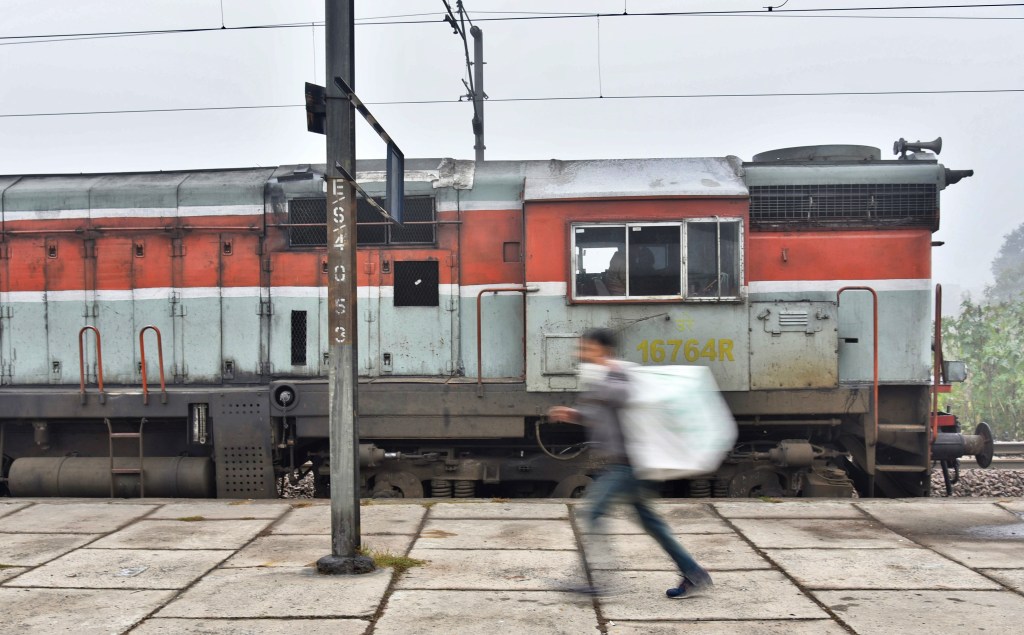
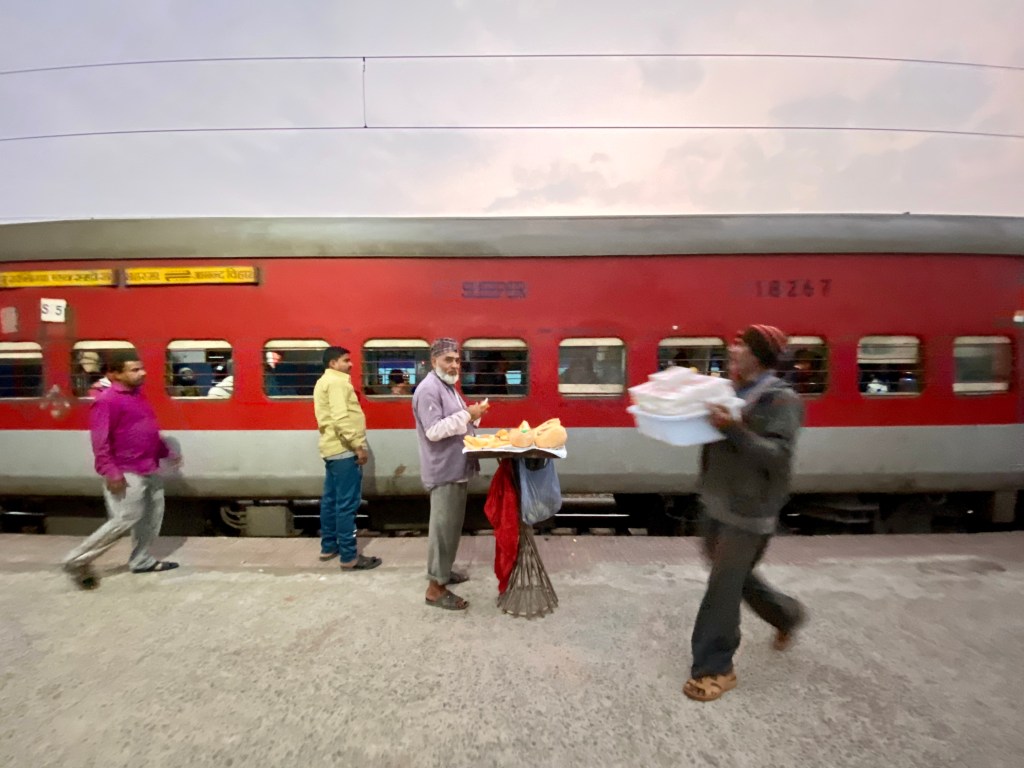
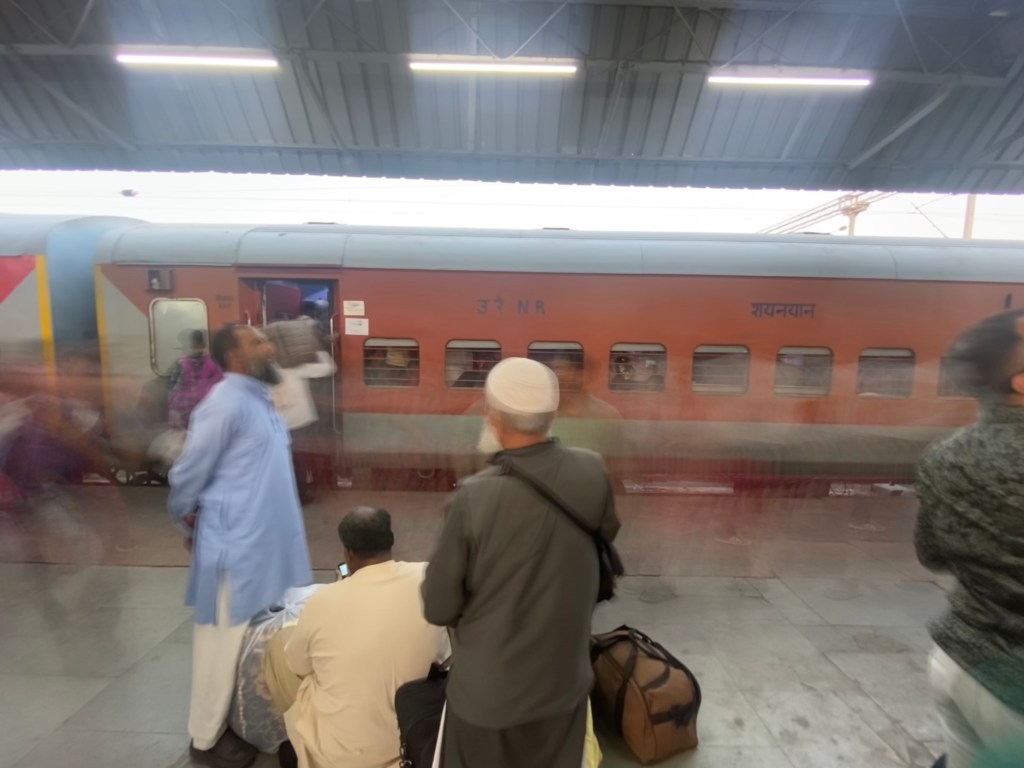
Hawkers, like itinerant minstrels, traverse the platform, their calls echoing through the air like a dissonant melody. The chaiwalas with their rhythmic chants, the snack sellers with baskets balanced on their heads—each is a note in a composition that resonates with the hustle of commerce. The richness of this auditory flux is juxtaposed with the underlying desolation that these transient dealings embody, a reminder of the ephemeral nature of human pursuits.
Travellers, a diverse ensemble, traverse the platform with dreams and burdens in tow. A suited executive, engrossed in a laptop, shares the same space as a labourer, their journeys intersecting briefly in the grand narrative of transit. Coolies, draped in red, stand as silent witnesses, their shoulders bearing not just luggage but the weight of untold stories. In their labour, I discern the rhythm of survival, a stoic dance against the backdrop of routine.
Auto-rickshaw and taxi drivers, stationed like silent sentinels, await the next act in this worldly theater. Their weathered eyes scan the platform, seeking the gestures of potential passengers, their narratives intertwined with the evanescent lives they ferry. Police officers, patrolling with a vigilant eye, are the silent guardians of this unfolding drama, a reminder that order exists in the midst of chaos.
Tea and snacks vendors, shouting their offerings, punctuate the scene with their persistent calls. The aroma of street food, a heady mix of spices and anticipation, hangs in the air like a melancholic prelude. Puri sellers, their delicacy adorned with the vibrancy of flavors, add a touch of culinary drama to this tableau of fleeting moments.
Relatives, the emotional chorus, create poignant vignettes against the train’s impending departure. Tearful goodbyes and joyous reunions unfold like short stories, their intensity heightened by the relentless ticking of the station clock. Vendors, entrepreneurs in this theater of trade, carve spaces amidst the ebb and flow, selling bibelots and essentials to the travellers.
Little children, holding mothers’ fingers with innocent trust, navigate the sea of legs with wide-eyed wonder. Older ones move with a measured pace, their steps echoing the typical rhythm of life’s journey. Young ones, laughing carefree, inject moments of joy into the somber symphony, their laughter a poignant contrast to the contemplative expressions of those lost in their thoughts.
As I sit in the periphery, enveloped by the drama, a sense of world-weariness settles upon me. The station, with its bustling scenes and temporary characters, becomes a metaphor for the transience of life itself. The dissonant notes of commerce and emotion, the rhythmic dance of survival, all underscore the futility of worldly pursuits. In this grand theatre, I find no interest, only a detached observation of the fleeting moments that compose the temporal symphony—one that plays on, indifferent to my disengaged presence.
 Musings of a Wanderer