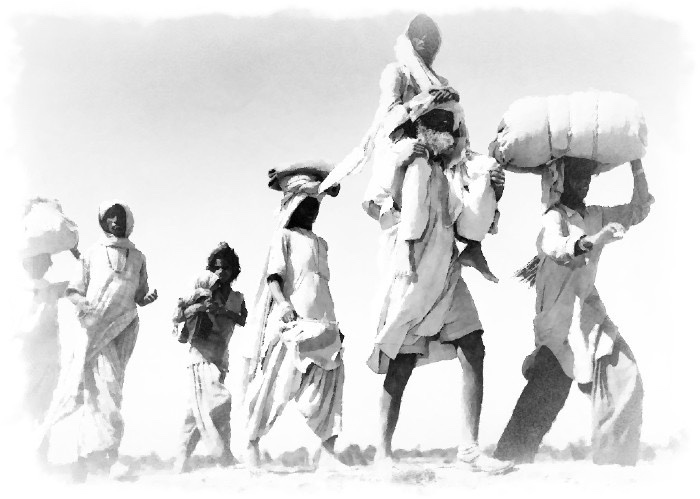
Recently one of my friends shared a video with me. (https://youtu.be/wZXrYjMNvXc)The footage captured the story of an aged man from Pakistan, remembering his childhood and roots in pre-independence India. The story was based in my village, and it was astonishing to see that even after more than 70 years, the octogenarian remembers the details of the village. It was a heart-wrenching story that highlighted the pain of partition. Millions were uprooted from their ancestral homes and were forced to live in a foreign land where they had to start the life afresh. Many lost their lives, leaving deep scars on the psyche of the family members. A large number were orphaned, and numerous lost their lifetime earnings. At the end of it all, there came into being two independent countries that have been constantly at war with each other. The video highlighted another beautiful human emotion-the love of humanity beyond narrow divisions of religion. The protagonist fondly remembered his Hindu friends. He tells about a temple near his house with great reverence and nostalgia, thus highlighting the authentic secular culture of united India. With great respect and tears in his eyes, he talks of a man (Captain Ram Nath, a veteran of the two World Wars), who, without caring for his safety, protected the minority population of the village from the onslaught of marauding crowds. If commoners were living in such harmony, then who needed the partition?
The greed for political power by the so-called representatives of faith led to the drawing of a line through the heart of a content and happy nation. The mischievous elements from both religions did not take much time to get incensed by the atrocities committed by the other side on their co-religionists. Many people with vested political interests added fuel to the fire by rumour-mongering. Within few months of the announcement of the intended partition, the harmonious environment of co-existence was poisoned. Hate was in the air.
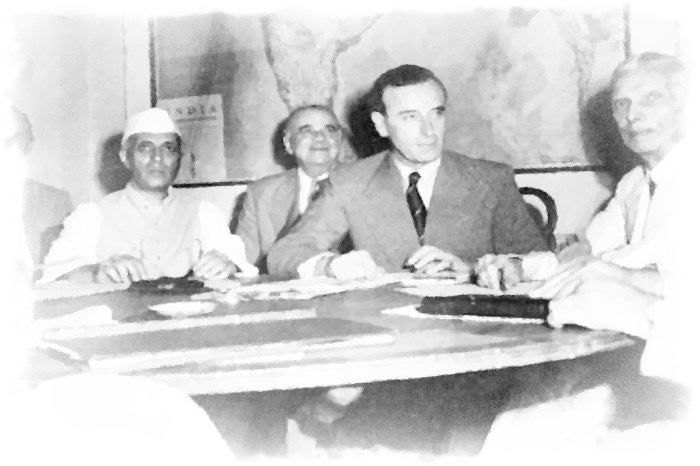
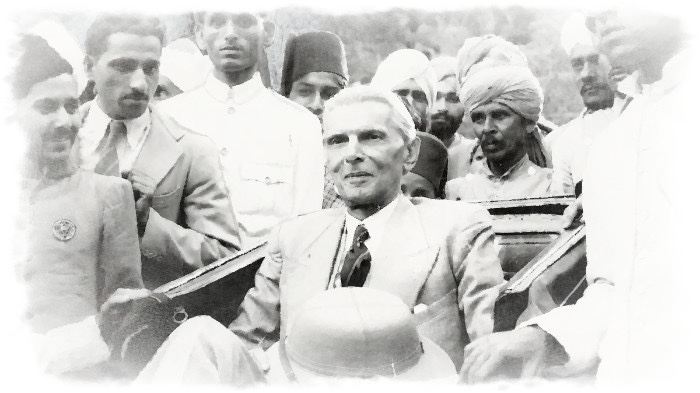
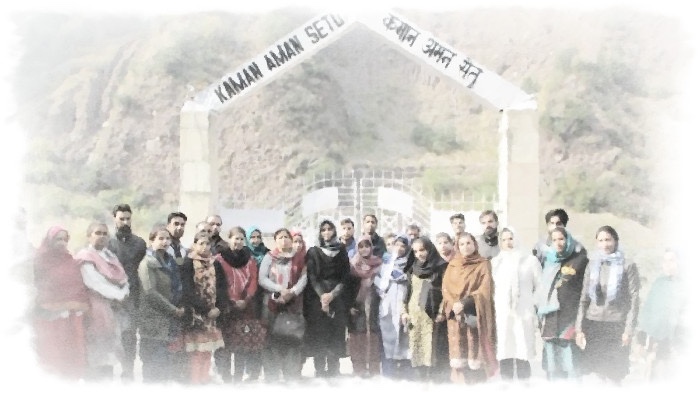
The human stories of suffering due to partition like the one shared in the video are many, and a whole generation was affected by divisive politics. During my extensive travels in the border areas of Jammu and Kashmir, I have had the chance to interact with people who were hit hardest by the partition. The ever-increasing hostility between the two states has only added to their woes. Unlike the rest of the country, where the border was drawn after due process and deliberations, this was not the case with the line drawn in the region of Jammu and Kashmir. The ‘line of control’ is arbitrary and represents the actual positions held by the opposing armies on the declaration of ceasefire after the 1971 Indo-Pak conflict, rather than based on any political or ethnic division. The line is not a recognised international border and thus, is open to seemingly unending strife. It takes a lot of effort to keep your emotions in check when you hear the stories of families divided across the two nations. Villages are divided, and it is common to find brothers living on the opposite side of the dividing line. Daughters married in the villages across have not met their parents for ages. Fathers look across the line with the hope to get a glimpse of their long-gone sons. Many died waiting for their loved ones to return. To my horror, I came across a man separated from his wife and children due to the dividing line. (Surprising and tragic… Isn’t it? That’s a story for some other day).
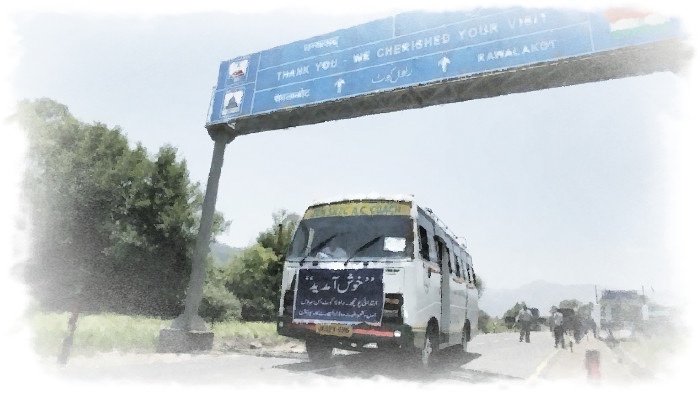
The government has made an effort to ease the meetings of the divided families by fast-tracking the visa granting mechanism and starting the bus services. Still, unfortunately, most of the times, it is dependent on the relations between the two nations. If the relationship is going through a rough patch, the bureaucratic clearances are likely to get delayed, and if there is a temporary thaw, the procedural time may be curtailed.
My maternal family migrated from Peshawar and settled in Punjab, and I can relate to what the uprooted generation feels like. My maternal grandfather use to get overwhelmed with emotion while talking about his younger years on the foothills of Hindukush. He had so many tales and interesting anecdotes from his travels to Kabul, Balkh, Bukhara and numerous other historical cities in the region. Till his death recently, he fondly remembered and yearned for his ancestral village.
Our two countries have been fighting for so long at an enormous cost of men and material. There is a need to make an effort to end this, and the generation which witnessed the carnage of partition, I think, can make a significant contribution towards that. The people of that generation have grown old and are slowly fading into the fog of time. They are yearning to see their hometowns on both sides of borders, and we must endeavour to give them this happiness. Both the countries should rise above petty politics and facilitate such visits. These visits will help in keeping the connections intact to some extent. The people from the next generation who will accompany them will get to know about each other’s society. The suspicions about ‘kafir’ and ‘mullah’ will get cleared, and they may be inspired to stay connected with the roots of their forefathers. This tenuous link of the dying generation which two countries are left with must be utilised before it withers away. The time is significantly less, and we must act fast.
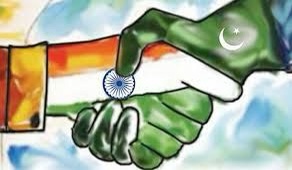
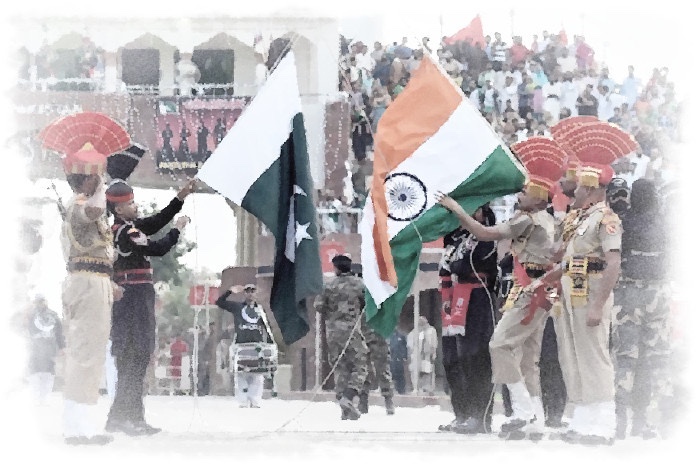
The partition was a reality, and so is the birth of two sovereign nations. We have similar culture, ethos and a common heritage. We speak a similar language, and even we look the same. We listen to the same music, and we watch the same movies. We must now endeavour to think of reconciliation and look ahead to make our future better. People-to-people contact and cultural exchanges will undoubtedly help reduce the tensions if both countries seriously think of doing the same and these ‘old people’ can be the ‘initiators of change’.
 Musings of a Wanderer