The tradition lives because young people come along who catch its romance and add new glories to it. Michael Novak
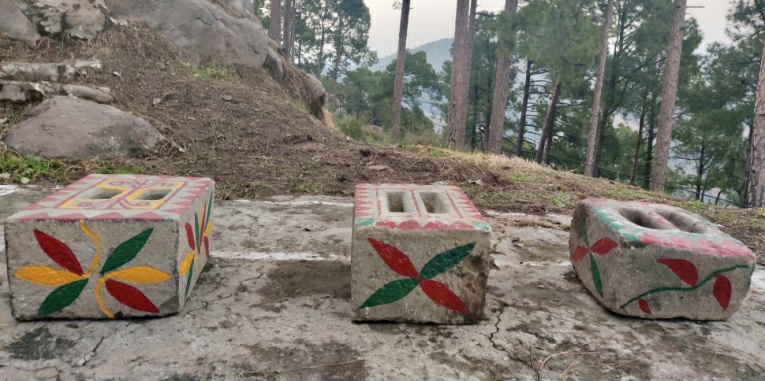
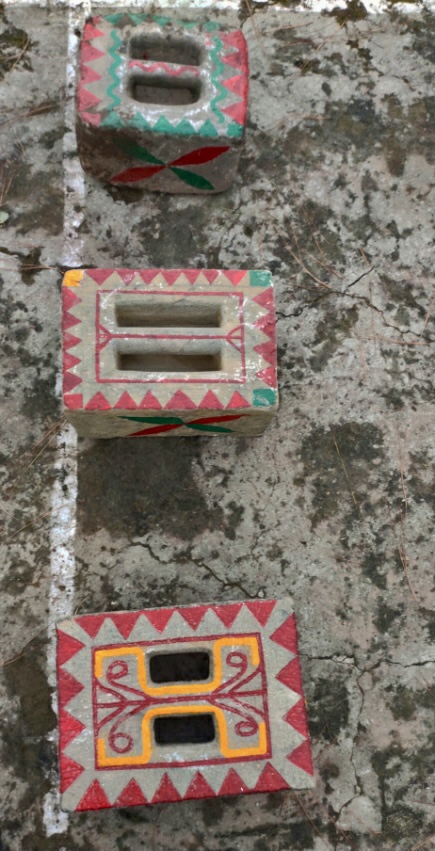
India is a land of varied cultures and traditions and some of these are peculiar, some logical, some weird and some are outrightly funny. Imagine that in a marriage, the party of the bridegroom has to prove their worth before they can get their loved one married to the girl he wants to get married to, whether through arrangements and settlements made by his parents or out of love. Any failure on such a public stage will leave the male members of the groom’s side disrobed of their honour and they will go out of their way to prove their worth. Something of the similar kind happens or use to happen until recent times, in twin districts of Poonch and Rajouri of Jammu and Kashmir region in northern India. On arrival of the marriage party, before getting a traditional welcome, a heavy and awkwardly designed cubical carved stone waited for them at the gates. The groom’s party, which traditionally consists of relatives and friends have to pass the test of lifting this heavy stone.

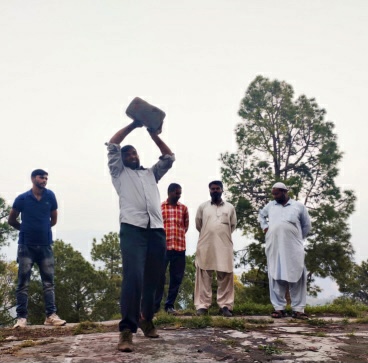
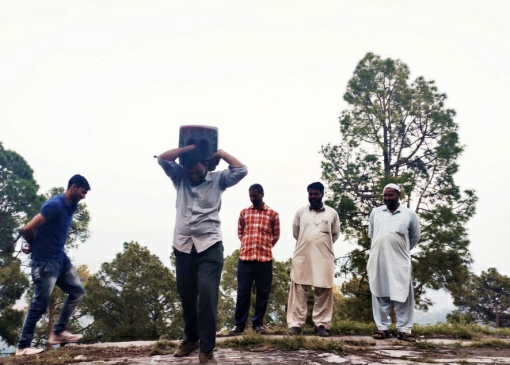
The people living on southern slopes of Pir Panjal ranges are physically sturdy and mentally tough because of the austere and spartan conditions they inhabit in -high rising mountain ranges and meadows, away from the road connectivity. The availability of grasslands and meadows on higher reaches are like goldmines for them. In water bereft terrain, they provide much-needed fodder for their livestock, which provide them with milk, wool and meat – the primary source of their income. The tough living conditions, wherein all essential commodities are manually lugged to their mountain abodes, give these people distinction and capability to lift heavy loads and face nature’s elements and occasional fury, with ease and smile. The tradition of lifting a heavyweight to prove one’s worth is thus, likely, has its origins in their tough living conditions.
Armed with this knowledge from a native, I started seeking out people who have been seigneurs of this sport in the past, since in recent times, people have almost abandoned the tradition. Fortunately, I could locate, Zaffar, an 80-year-old veteran and a champion of the game. Looking at his flushed red face and a sturdy and tall body frame, one can not make out that he has aced eighty springs, however, as he gets up, the limp in his walk is a giveaway and a reminder of ageing. After the initial exchange of pleasantries, we sat down over a cup of locally brewed ‘noon chai’(A traditionally prepared local salted tea), to talk about his life and exploits in the traditional game.
With a tinge of nostalgia, he remembered his father who was a renowned wrestler of the region and who had no match in Rajouri, Poonch, Kotli and Nakyal (later two towns are now on Pakistani side of Line of Control). Growing up under the guidance and influence of a renowned grappler father, wrestling was the obvious choice for the young lad. He grew into a tall and handsome burly teenager, who started gaining prominence in wrestling circles. “A road accident, then suddenly changed everything”, he murmured, in a melancholic voice. Looking deep into the thin air, thinking of incident, he explained that the ill-fated bus in which he was travelling from Nakyal to Kotli met with an accident near Peer Nasrona Gali, a mountain pass on famous Mata Ranjyoti mountain range, joining the two cities. Ironically, he was heading to Kotli to participate in a wrestling duel with one of the famous wrestler of the times and win against him would have given Zaffar recognition in his chosen field. The accident not only broke his ankle but his spirits too. The young cheerful boy turned into a disgruntled youth. His father tried his level best to get him treated. No stone was left unturned to get the boy back into his old form- from a local hakim, a sorcerer to doctors in Kotli & Jammu, all were
consulted, but the destiny of the boy wasn’t in wrestling.
The life-changing event came in a marriage of his one of his uncle, wherein party was welcomed by the traditional carved cubical stone. Keeping the reputation of the groom’s
family as wrestlers in mind, the stone was freshly carved and was rumoured to be heaviest in the region. The stones in the region were few and were of different weights and of course, a unique ‘reputation’ – even with the almost same weight, some are known to be too easy to lift and other difficult, because of their different shape and size. The reputation of the stone was always an important factor and accordingly, the groom’s family always made it a point to include some famous lifters of the region in their marriage party. These lifters were specially invited and were given the same importance and respect if not more than the groom. So here, Zaffar’s uncle’s marriage party was surprised to see the freshly carved stone, about which the lifters in the party had no idea how to tackle. The three main lifters accompanying the marriage party failed the test and Zaffar’s father was fuming at the failure. Sensing that it may lead to loss of face for the family, Zaffar volunteered to give it a try and lo! and behold, to relief and a happy surprise the young teenager lifted the stone and there was a loud cheer. A new star emerged on the horizon of the stone lifting and there was no looking back after that for Zaffar-he found a new passion.
Zaffar explained that people are not very sure about the exact time of appearance of this sport. One school of thought says that it was born as a rite of passage for men in society. Around the globe, in different times in history, different cultures understood that there is a need to have some clear markers on the journey to manhood as merely age can’t determine a man’s true worth. And thus, in every culture, there were clearly defined rites of passage for men, which were one of the most important customs of the society. This traditional pastime doesn’t look like a formalised rite of passage for men and folklore also claims that stone lifting started as a pastime in meadows, where young boys and men use to move in summers. Devoid of any constructive pastime, someone came up with an idea of lifting a particular stone and slowly it was formalised with certain rules.
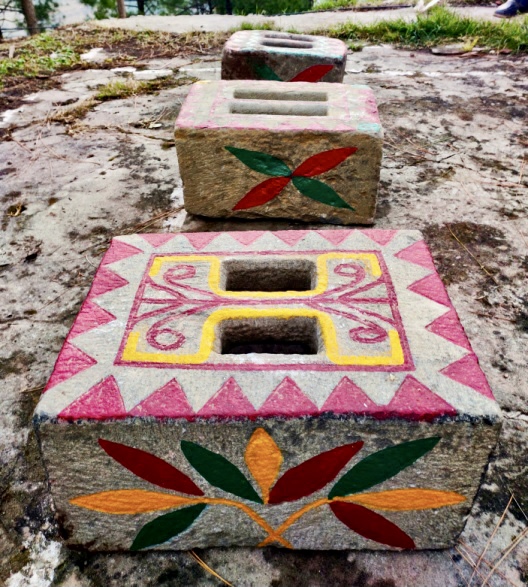
The stone gradually got some makeover and at some places, the local art started appearing on the stones. A standard cube evolved as the standard shape and since there was no particular place to hold the stone from, a carved handle at the centre of the stone was formalised. The honour saving event at the marriage gave young Zaffar’s life a new meaning. The beat of dhol during wrestling, which use to send a spurt of adrenaline, was doing the same in stone lifting. He started participating in local contests and slowly carved a niche for himself. He became the pride of the marriage parties and could lift any stone in the region and especially the stone in Rajdhani (A village In Manjakote block of Rajouri District), which people claimed was more than 170 kg has a record of sorts – till date it has been tackled by only one lifter – Zaffar.
The traditions of lifting stones in meadows during summers slowly crept into social functions and marriage is one of the important ones and it was connected to honour of the family which over time was of gradually watered down and the seriousness of the sport was brought down to light-hearted banter between groom and bride’s side. The grooms’ side also came up with their tradition of welcoming the bride’s brothers who use to accompany their sister to her in-laws place as a final custom of giving away their sister to another family. These brothers started getting welcome with lifting stones waiting at the gates of the groom’s house. The reciprocal tradition continued in some localities, however, most of them dropped out of respect for the girl’s family. The groom’s family always use to summon the lifters from neighbouring villages who use to accompany them to bride’s place and could salvage their honour, however, there wasn’t much choice with bride’s brothers, who could be a young boy who would have never tried lifting this bizarre-looking stone. Zaffar says that with the advent of education and awareness, the people started moving out in search of employment and the sport started losing its charm. The information age armed with internet and cable connection acted as the final nail in the coffin and in a fast-moving world, the lifting events steadily disappeared from marriage scenes and in present times it has come to a nought and people like Zaffar have resigned to their fate. Only in government organised fairs or sports meets one can get a glimpse of the sport and that too with minimal participation. The nagging injuries caused by the sport, like the one Zaffar is suffering from in his spine due to continuous awkward strain also acted as a deterrent. The sport seems to be dying a slow death. The only witness remaining are Zaffar and his few carved stones, and Zaffar being a mortal will coalesce with the mother Earth in his grave someday, however, the carved stones will live and so will be the folklore of Zaffar.
 Musings of a Wanderer