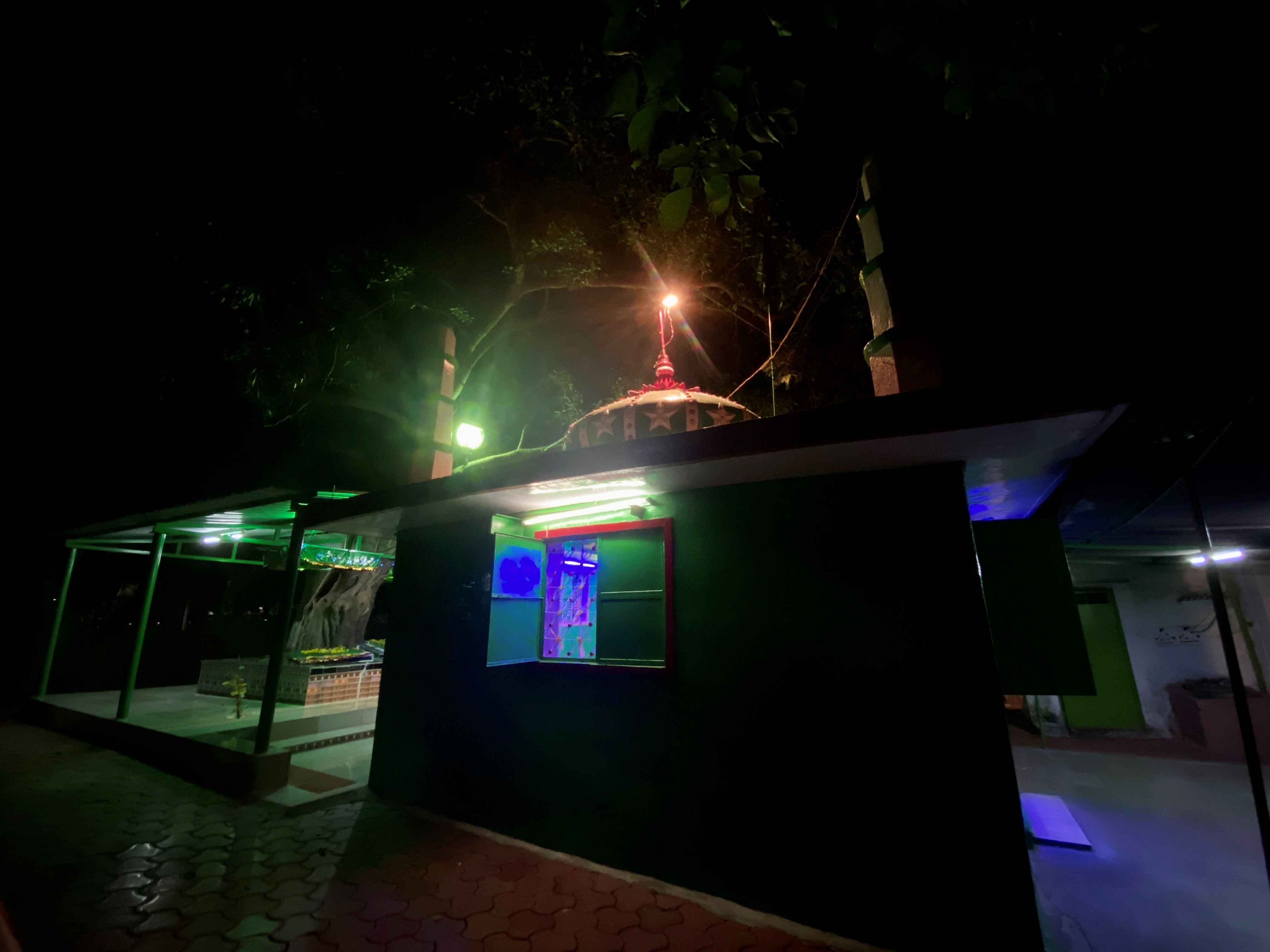
The colourful lights of the dargah always attracted my attention, however I kept postponing the visit due to ongoing pandemic. From a distance, due to the thick herbage blanket, not much can be seen except for the dome and the bright dancing decorative lights that are switched on in the morning and evening hours. There was something unknown, an unexplained attraction about the shrine, which was always calling me and then finally, I walked into the premises and was surprised to see a beautifully maintained shrine. It was like a hidden treasure, mystically shrouded from the view and that too just next to a busy crossroad which I sauntered on daily basis.
As I was about to move out after paying my obeisance, I spotted a seemingly unpretentious man sitting under a tree. Being a dimly lit corner of the premises, I missed him at the first instance. From a distance, he looked to be in a meditative trance. Curious to learn the lore of the Sufi whose grave this dargah houses, I walked up to him. After exchanging pleasantries, he introduced himself as Vijay. He revealed his ignorance about the history of the shrine, however, with a sense of humble pride, he shared that the dargah was looked after by his father for about 80 years and after his father’s death he has taken over the responsibilities of upkeep of the shrine. Every Thursday, he cooks prasad(sweet yellow rice) for the visitors and organises the distribution with the help of a few odd volunteers
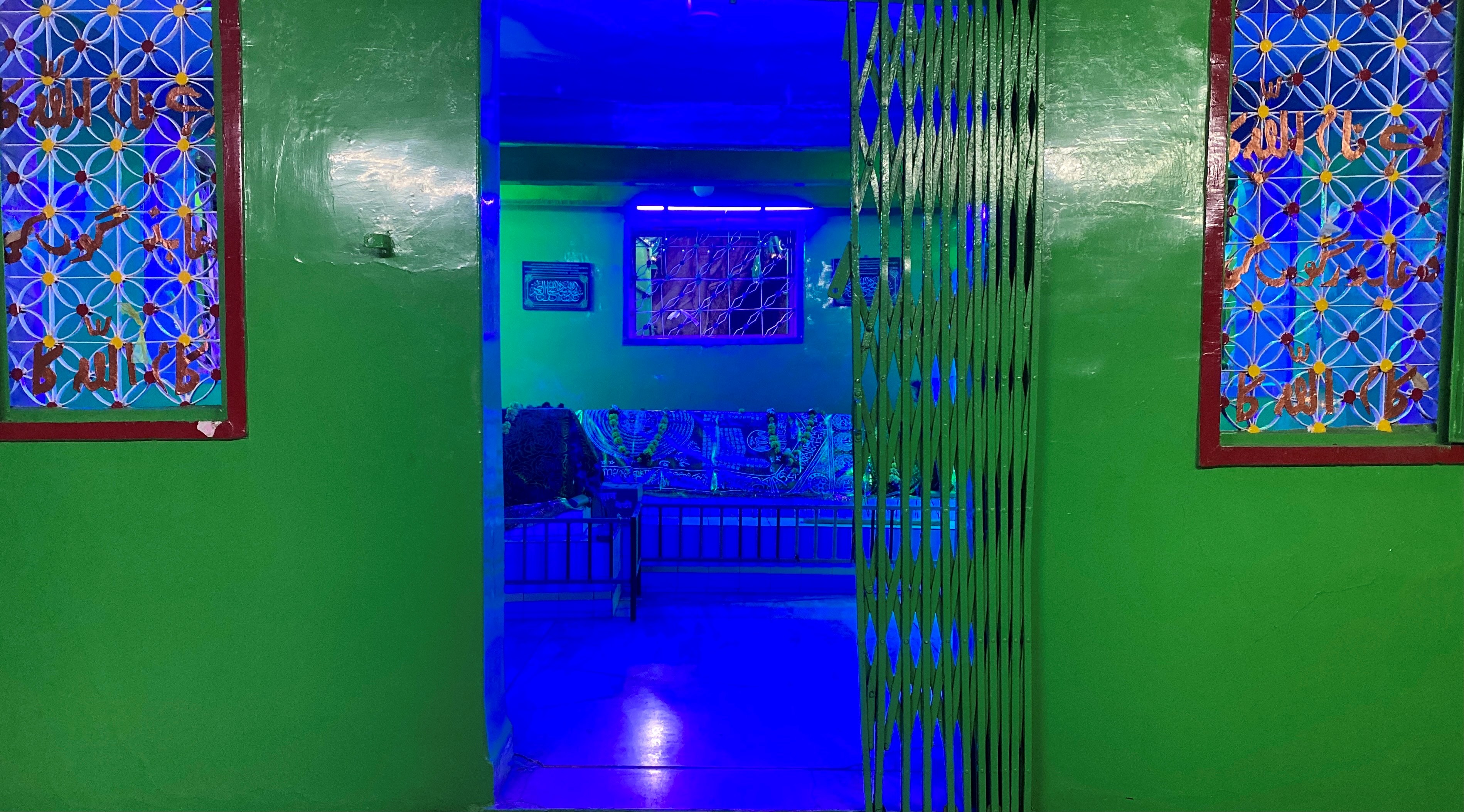
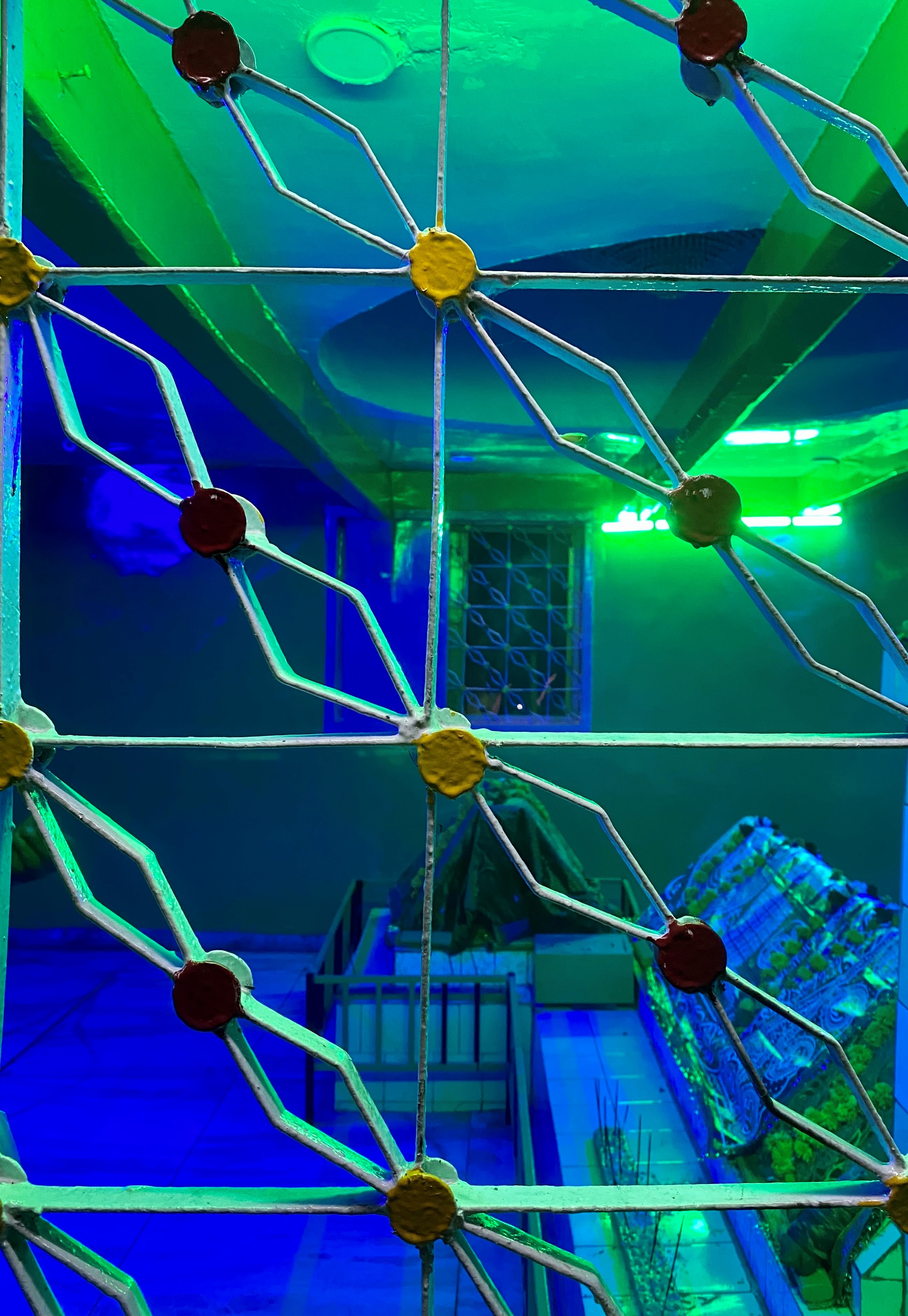
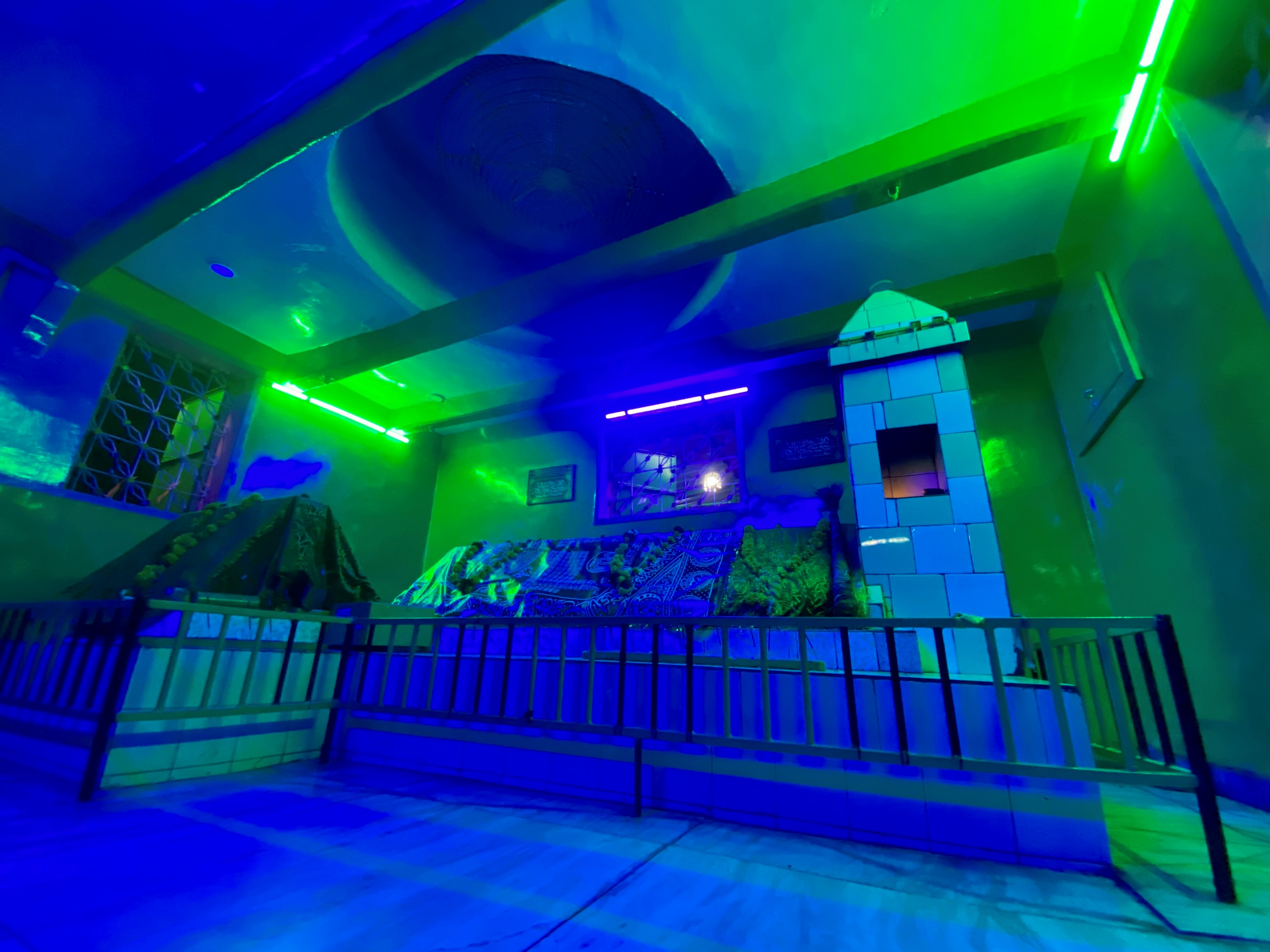
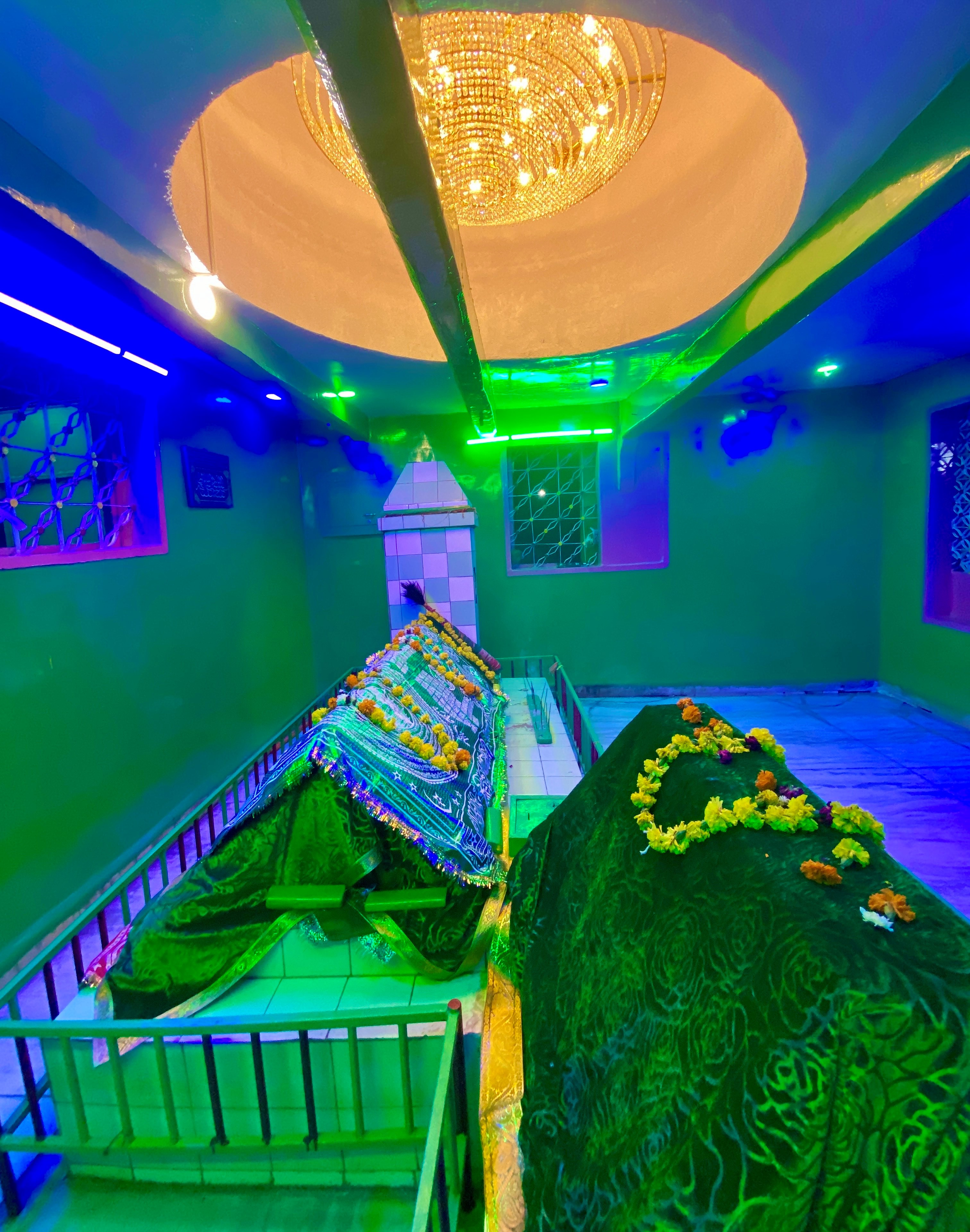
During the course of our conversation, in a very casual manner, he told me that during the last Muhharam, he got the whole premises painted and repaired. The interiors of the shrine were bathed in the beautiful soft light of blue-green turquoise hues. When I expressed my desire to click the pictures of the place for my memories, with the enthusiasm of a child who has been asked to show his newly bought toy, he switched on the bulbs of a huge chandelier, beautifully hanging inside the dome of the building. It was intricately designed glass fixture and was the centrepiece of the shrine. When I inquired about the expenditure on the decorative piece and who paid for it, with a tinge of pride, he disclosed that he mainly funded it from his savings and few odd donations he received from the visitors. It was a pleasant surprise to hear these words from a common man as he said something very beautiful and mature and I think he does not even realise that his actions are a lesson for humanity. First of all, even being a Hindu, he is maintaining a Muslim Sufi shrine and moreover, he is taking care that the local customs of Muslims are respected. Co-inhabiting in a town with Shia Muslims, Vijay understands the relevance of Muharram and considering it to be auspicious, he got the shrine maintained and repaired during that time. (Something similar to maintaining and cleaning the houses during Diwali by Hindus). The enthusiasm and calmness of Vijay were infectious and his conduct had a positive aura and vibes around it.
In a time when the world seems to be divided on communal lines and media, where some people with vested interests leave no stone unturned to highlight issues of divide between people of different religious groups, this meeting with Vijay came as a whiff of fresh air in a claustrophobic communally charged environment. I think, in spite of whatever is portrayed, common Indian people (or for that matter people of any nationality) live a life of simplicity, harmony and peace, without caring much for religious or any other dividing factor. I feel, Vijay represents the true human spirit and spirit of an Indian, the one we all endeavour to be.
 Musings of a Wanderer